
 By Carmen Bearden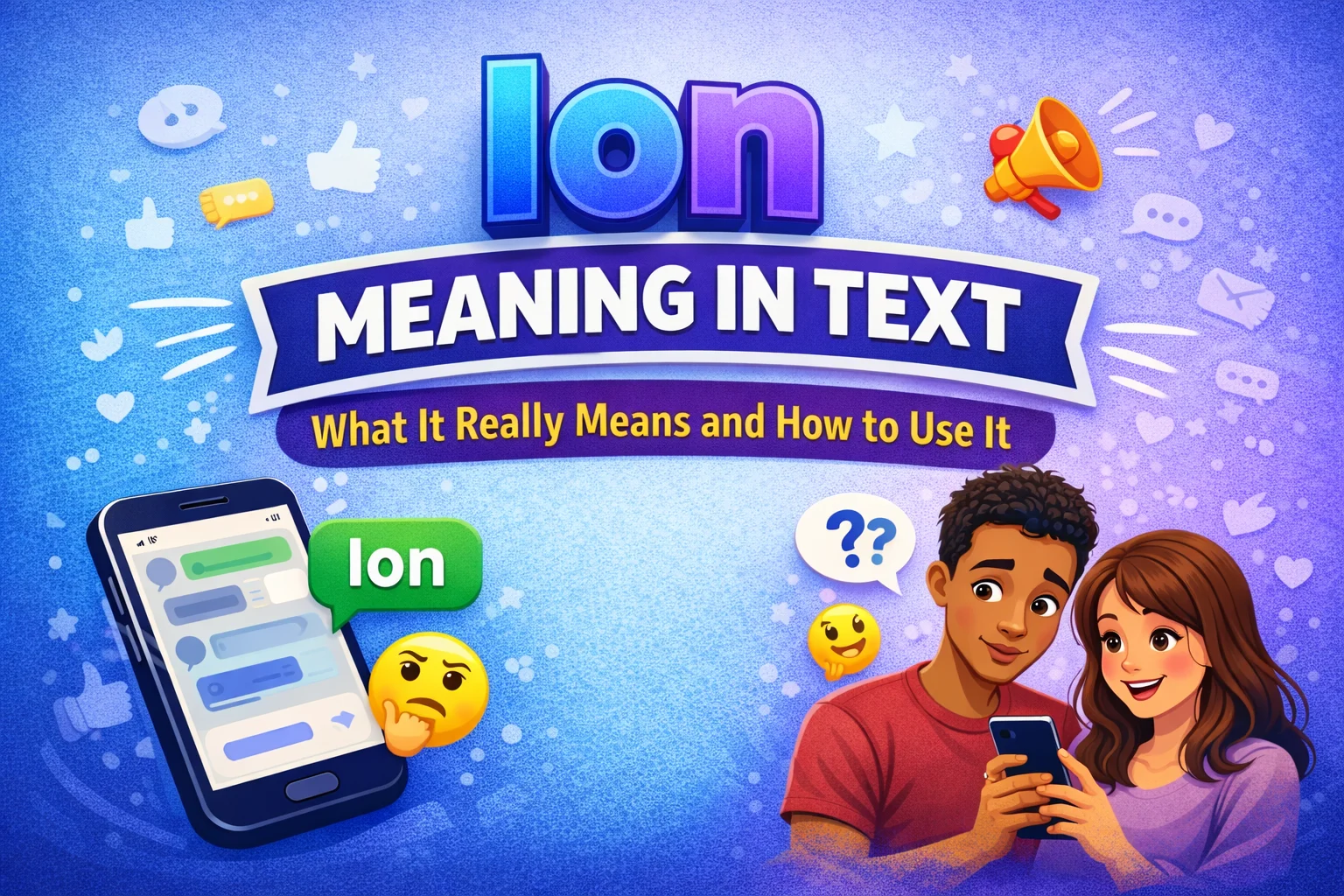
Have you ever been texting or scrolling through Instagram and saw someone type “ion” and wondered what it meant? You’re not alone. Many people see this short, simple word and scratch their heads. Is it a typo? A scientific term? Or something totally different? In today’s guide, we’ll break down ion meaning in text, explain its usage on social media, texting apps, and even give you tips on when it’s appropriate to use. By the end, you’ll feel confident knowing exactly what people mean when they type “ion” in a message.
This isn’t just about definitions; we’ll explore real examples, common mistakes, and subtle nuances that make digital communication tricky but fun. Whether you’re a teen trying to stay up-to-date with texting slang or an adult wanting to understand Instagram lingo, this guide has you covered. Let’s dive in!
What Does Ion in Text Mean?
At its core, ion is short for “I don’t.” In texting and social media, it’s a way for people to quickly express what they won’t do or don’t want to do. For example, if someone says, “ion feel like going out tonight,” they mean, “I don’t feel like going out tonight.”
People often use ion to make messages sound casual and fast. Typing “I don’t” can feel long and formal when texting friends. So instead, they type ion, and the meaning is understood in context. This style is common in informal chats, group messages, and social media comments.
How Did Ion Become Popular in Texting?
The rise of texting slang has made abbreviations like ion very common. Social media platforms like Instagram, Twitter, and TikTok encourage short, snappy messages. Typing ion saves time and effort, especially on phones where typing long phrases can feel tedious.
The trend also comes from casual speech patterns. People often say “I don’t” quickly, and over time, it naturally evolved into ion in digital form. Its simplicity, brevity, and ease of use make it a favorite among teens and young adults.
Ion Meaning in Text Instagram
On Instagram, you’ll often see ion in captions, comments, or direct messages. For example:
- “ion care what people say” → “I don’t care what people say”
- “ion know what to do” → “I don’t know what to do”
Using ion in Instagram posts gives your text a chill, casual vibe. It shows that you’re relaxed and speaking like you would in real life. Many influencers and everyday users prefer ion because it keeps their captions short, relatable, and trendy.
Ion Mean in Text Messages
In texting, ion functions just like it does on social media. It’s usually combined with verbs to form a negative phrase. For instance:
- “ion like that movie” → “I don’t like that movie”
- “ion want to argue” → “I don’t want to argue”
It’s essential to remember that ion is informal. Avoid using it in professional emails or serious conversations. It works best among friends, family, or casual chat groups where slang is acceptable.
Examples of Ion in Everyday Conversations
Here are some practical examples of ion in text conversations:
- Friend: “Are you coming to the party?”
You: “ion feel like it.” → You’re saying you don’t feel like going. - Group Chat: “Should we study together?”
You: “ion really care.” → You’re not concerned or interested. - Instagram DM: “Wanna hang out?”
You: “ion know, maybe later.” → You’re uncertain or politely declining.
These examples show that ion can express moods, feelings, or opinions quickly and casually.
Why Do People Prefer Ion Over I Don’t?
Typing ion has several benefits:
- Saves Time: It’s faster than typing “I don’t.”
- Feels Casual: Makes messages sound friendly and laid-back.
- Trendy: Using slang like ion signals that you’re familiar with current texting trends.
- Matches Speech Patterns: People often say “I don’t” quickly in conversation, and ion mimics that speed in text.
Because of these reasons, ion is popular among teens and social media users. It’s a perfect example of how language evolves in the digital age.
Ion vs Other Slang Terms
In texting, there are many slang words similar to ion. For example:
- idk → “I don’t know”
- idc → “I don’t care”
- smh → “Shaking my head”
Like ion, these abbreviations make typing faster and messaging casual. The key difference is that ion replaces “I don’t” in general sentences, while others like idk or idc are specific to knowledge or feelings.
Common Mistakes When Using Ion
Even though ion is simple, people often misuse it. Some common mistakes include:
- Using in formal writing: Avoid ion in school essays or emails.
- Overusing it: Too many ion messages can seem lazy.
- Wrong context: If someone doesn’t understand slang, they may misinterpret your message.
The best approach is to use ion casually and with friends who understand texting shorthand.
How to Respond When Someone Uses Ion
If a friend texts, “ion feel like hanging out,” you can respond in several ways:
- Supportive: “No worries, we can chill another time.”
- Curious: “Oh, why not?”
- Humorous: “Ion either, lol.”
Understanding ion meaning in text helps you reply appropriately without confusion.
The Cultural Impact of Ion
Slang like ion shows how language adapts in the digital age. Short forms make communication faster and more playful. They also help people express personality, tone, and mood in text, where voice and facial expressions are absent.
Social media platforms amplify this effect. Trends like ion spread quickly because people see others using it. Soon, it becomes normalized in casual conversations, shaping the way young people communicate online.
LSI Keywords to Include in Your Texting Vocabulary
To improve your understanding and SEO relevance, here are some related terms:
- texting slang
- social media abbreviations
- internet language
- casual text phrases
- online messaging shortcuts
Using these phrases naturally helps explain ion meaning in text and makes your article more comprehensive.
FAQs About Ion in Text
1. What does ion in text mean?
It’s shorthand for “I don’t” in informal texting or social media.
2. How do you use ion in a sentence?
Example: “ion want to go outside” = “I don’t want to go outside.”
3. Is ion only used by teens?
Mostly yes, but anyone familiar with social media slang might use it.
4. Can ion be used in professional communication?
No, it’s informal and should be reserved for casual chats.
5. Why do people prefer ion instead of I don’t?
It’s faster, casual, and matches conversational speech patterns.
6. Does ion have other meanings?
Yes, in science, “ion” refers to a charged particle, but context makes the difference.
Conclusion: Mastering Ion in Text
Now that you know the ion meaning in text, you can confidently understand and use it. Whether you’re replying to friends on Instagram, texting in a group chat, or just curious about online slang, ion makes communication fast, casual, and relatable.
Next time you see ion in a message, remember: it’s just shorthand for “I don’t.” Use it wisely, keep it casual, and have fun with your text conversations. Sharing these tips can even help friends who aren’t up-to-date on texting slang.
Understanding ion is more than learning a word; it’s about connecting with modern digital culture. So, go ahead, text like a pro, and enjoy your conversations with confidence!