 By Carmen Bearden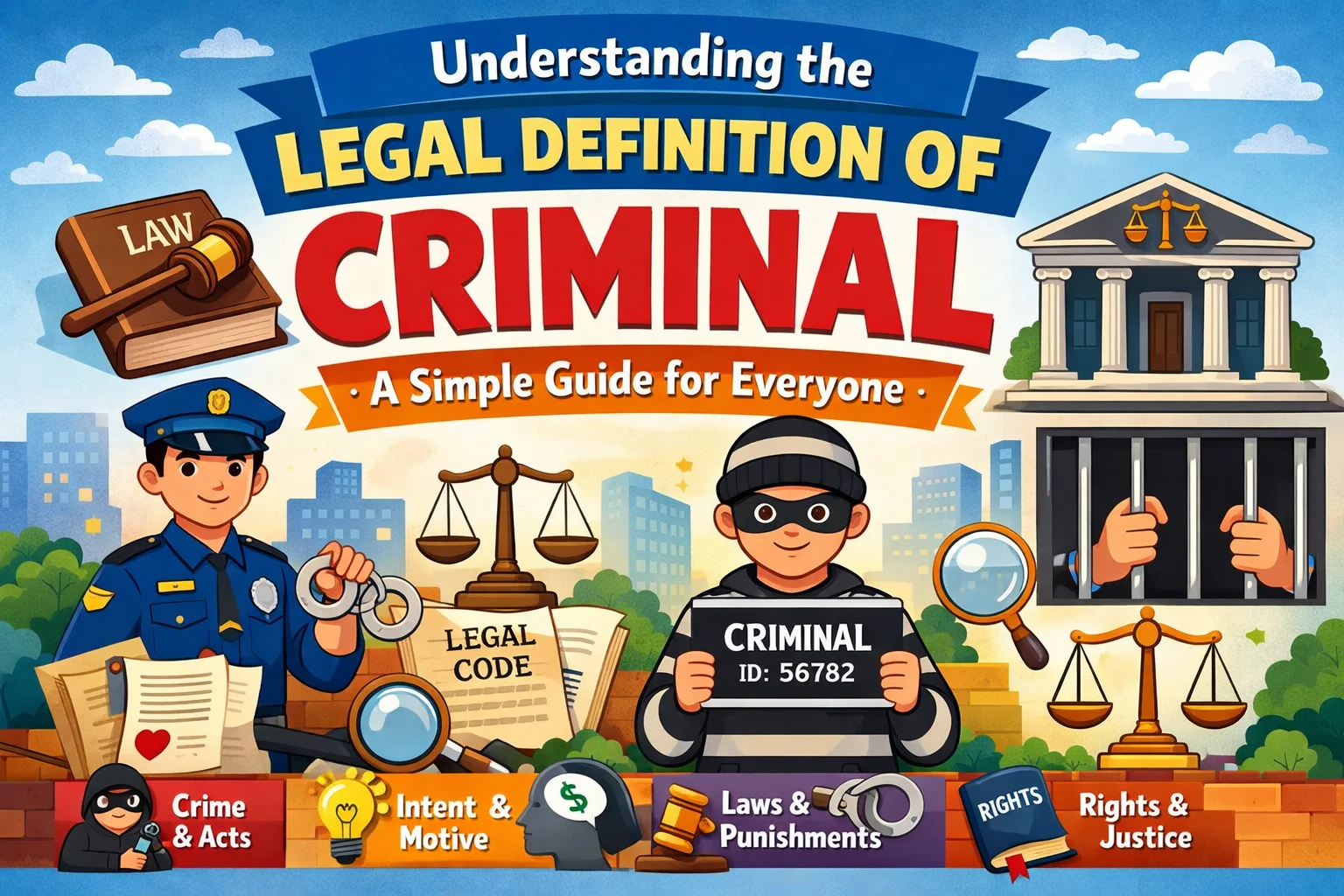
Introduction: Why This Topic Matters
Have you ever wondered what makes an act a crime? The answer lies in the legal definition criminal, a concept that explains how the law sees harmful behavior. This idea is not just for lawyers or judges. It affects everyday life, from small disputes to serious cases.
In simple terms, the legal system uses clear rules to decide what actions are wrong and punishable. But these rules are not always easy to understand. Many people think a crime is just something “bad,” but the law goes much deeper than that.
In this guide, we will break down the legal definition criminal in a way that is easy to follow. You will learn what makes an act criminal, the key elements involved, and why understanding this topic can help you stay informed and protected.
What Does “Legal Definition Criminal” Really Mean?
The legal definition criminal refers to how the law defines a crime. It is not based on personal opinions or feelings. Instead, it follows written laws created by governments.
A criminal act is usually something that:
- Breaks a law
- Harms people or society
- Leads to punishment by the state
For example, stealing is considered a crime because laws clearly say it is illegal. Even if someone thinks it is okay, the law does not agree.
Understanding the legal definition criminal helps people know their rights and responsibilities. It also helps courts decide whether someone is guilty or not.
Key Elements That Make an Act Criminal
Not every harmful act is a crime. The law looks at specific elements before labeling something as criminal.
Main Elements Explained
| Element | Meaning | Simple Example |
|---|---|---|
| Act (Actus Reus) | The physical action | Taking someone’s phone |
| Intent (Mens Rea) | The mental state | Planning to steal |
| Causation | Linking action to harm | Theft causes loss |
| Harm | Damage done | Owner loses property |
Each part must be proven in court. Without these elements, the legal definition criminal may not apply.
Actus Reus: The Physical Action
The first part of the legal definition criminal is the act itself. Lawyers call this actus reus, which means a guilty act.
This could be:
- Doing something illegal (like stealing)
- Failing to act when required (like not helping a child in danger)
For example, if someone accidentally bumps into another person, it is not a crime. But if they hit someone on purpose, it becomes criminal.
The law focuses on real actions, not just thoughts. You cannot be punished for thinking about a crime. There must be an actual act.
Mens Rea: The Intent Behind the Act
Intent is another key part of the legal definition criminal. This is called mens rea, meaning a guilty mind.
It answers the question: Did the person mean to do it?
There are different levels of intent:
- Purposeful (planned)
- Knowing (aware of consequences)
- Reckless (ignoring risks)
- Negligent (careless behavior)
For example, accidentally breaking a window is not the same as smashing it on purpose. Intent changes how the law treats the act.
Types of Crimes Explained Simply
Not all crimes are the same. The legal definition criminal covers many types of offenses.
Common Categories
| Crime Type | Description | Example |
|---|---|---|
| Felony | Serious crime | Murder |
| Misdemeanor | Less serious | Shoplifting |
| White-collar | Financial crime | Fraud |
| Cybercrime | Online crime | Hacking |
Each category has different punishments. Understanding these helps people see how the law works in real life.
Why Laws Define Crimes Clearly
The legal definition criminal exists to create fairness. Without clear rules, people could be punished unfairly.
Laws help:
- Protect society
- Set clear boundaries
- Ensure equal treatment
Imagine a world without clear laws. People would not know what is allowed or forbidden. This could lead to chaos.
Clear definitions also help judges make fair decisions. They rely on laws, not personal opinions.
Real-Life Example of Criminal Definition
Let’s look at a simple example.
Ali takes a phone from a shop without paying. This act includes:
- Action: Taking the phone
- Intent: Keeping it without paying
- Harm: Shop owner loses property
All elements match the legal definition criminal, so it becomes theft.
But if Ali picked up the phone by mistake and returned it, it would not be a crime. Intent matters a lot.
How Courts Decide If Someone Is Criminal
Courts follow a careful process when applying the legal definition criminal.
They look at:
- Evidence (proof of action)
- Intent (state of mind)
- Witness statements
- Legal rules
Judges and juries must be sure “beyond reasonable doubt.” This means they must strongly believe the person committed the crime.
This process protects innocent people from being wrongly punished.
Differences Between Moral Wrong and Crime
Not everything wrong is a crime. This is an important part of understanding the legal definition criminal.
For example:
- Lying to a friend is wrong, but not always illegal
- Breaking a contract may lead to civil issues, not criminal charges
Crimes are actions that harm society and break laws. Morality is based on personal or cultural beliefs.
This difference helps keep the legal system fair and focused.
Punishments in Criminal Law
Punishment is a key part of the legal definition criminal. It helps enforce laws and prevent future crimes.
Common punishments include:
- Fines
- Community service
- Jail or prison
- Probation
The type of punishment depends on the crime. Serious crimes lead to stronger penalties.
Punishment also aims to:
- Protect society
- Reform offenders
- Provide justice to victims
Why Understanding Criminal Law Helps You
Knowing the legal definition criminal is useful for everyone, not just lawyers.
It helps you:
- Avoid illegal actions
- Understand your rights
- Make better decisions
For example, knowing laws about online behavior can prevent cybercrime mistakes.
In today’s world, legal awareness is a valuable life skill.
Common Misunderstandings About Criminal Law
Many people misunderstand the legal definition criminal.
Some common myths:
- “If no one is hurt, it’s not a crime” (False)
- “Intent does not matter” (False)
- “All crimes lead to jail” (False)
Understanding the truth helps people avoid confusion and fear.
The Role of Government in Defining Crimes
Governments create laws that shape the legal definition criminal.
They decide:
- What actions are illegal
- How serious each crime is
- What punishments apply
These laws can change over time. For example, some actions that were once legal may become illegal later.
This shows how the legal system adapts to society.
FAQs About Legal Definition Criminal
1. What is the simple meaning of legal definition criminal?
It is the law’s explanation of what counts as a crime and what actions are punishable.
2. Does intent always matter in a crime?
Yes, in most cases. Intent helps determine if the act was truly criminal.
3. Can someone be punished without doing anything?
Usually no. There must be an act or failure to act when required by law.
4. Are all crimes serious?
No. Some crimes are minor, while others are very serious.
5. What is the difference between civil and criminal law?
Criminal law deals with crimes, while civil law handles disputes between people.
6. Why is the legal definition criminal important?
It ensures fairness, protects rights, and helps maintain order in society.
Conclusion: Take Control of Your Legal Awareness
Understanding the legal definition criminal is more important than many people realize. It shapes how society works and protects individuals from harm.
When you know what counts as a crime, you can make safer and smarter choices. You also become more aware of your rights and responsibilities.
The law may seem complex, but breaking it into simple parts makes it easier to understand. From intent to action, each piece plays a role in defining criminal behavior.
Take time to learn more about legal topics like this. It is a small step that can make a big difference in your life.