
 By Carmen Bearden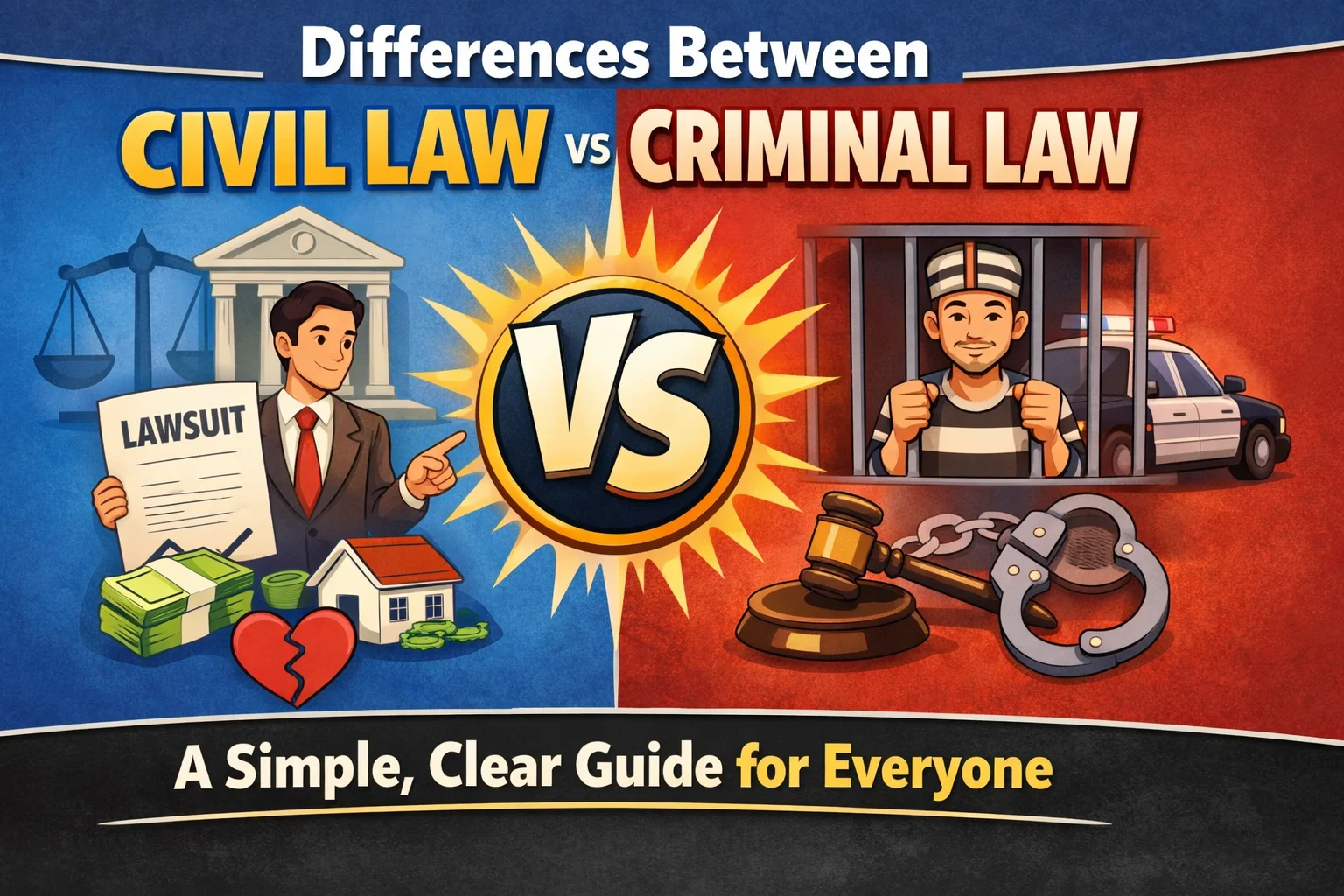
Understanding the differences between civil and criminal law can feel confusing at first. Many people hear these terms but are not sure what they really mean. Don’t worry—this guide will break everything down in a simple way. You don’t need a law degree to understand it.
In everyday life, laws help keep order and fairness. Some laws deal with personal disputes. Others deal with serious crimes. That is where civil law and criminal law come in. They serve different purposes, follow different processes, and lead to different outcomes.
In this article, we will explore the differences between civil and criminal law in an easy and friendly way. You’ll learn what each type means, how cases work, and why they matter. We will also use real-life examples to make things clearer. By the end, you will feel confident explaining this topic to anyone.
What Is Civil Law?
Civil law deals with disputes between people or organizations. These are usually about rights, money, or property. The goal is to solve problems and provide compensation.
For example, if someone damages your car, you can file a civil case. You are not trying to send them to jail. You just want your loss covered. That is a key point in understanding the differences between civil and criminal law.
Civil cases often involve contracts, property issues, or family matters. Divorce and child custody are also part of civil law. In these cases, the court tries to be fair and fix the situation.
From personal experience, many civil cases are less stressful than criminal ones. But they can still take time and money. The outcome usually involves paying damages or fulfilling an agreement.
What Is Criminal Law?
Criminal law deals with actions that harm society. These are considered crimes against the state. The government takes action against the person accused.
For example, theft, assault, and murder are criminal offenses. In these cases, the state prosecutes the accused person. The goal is punishment, not just compensation.
One of the biggest differences between civil and criminal law is who brings the case. In criminal law, the government is always involved. Even if the victim does not want to continue, the case can still proceed.
Punishments in criminal law can include jail time, fines, or community service. These penalties are meant to stop harmful behavior and protect society.
Main Purpose of Civil vs Criminal Law
The purpose of civil law is to resolve disputes. It focuses on fairness between individuals. The court tries to fix harm by awarding money or orders.
Criminal law, on the other hand, aims to punish wrongdoing. It also tries to prevent future crimes. This difference is central to the differences between civil and criminal law.
Think of it this way: civil law fixes problems, while criminal law punishes harmful actions. Both are important, but they serve different roles.
In real life, this difference helps keep balance. People can solve personal issues without turning everything into a crime. At the same time, serious actions are treated with strict consequences.
Who Files the Case?
In civil law, the person affected files the case. This person is called the plaintiff. They bring the complaint to court.
In criminal law, the government files the case. The accused person is called the defendant. The state acts on behalf of society.
This is one of the clearest differences between civil and criminal law. It changes how cases begin and move forward.
For example, if your neighbor breaks a contract, you file a civil case. But if someone commits robbery, the government files a criminal case. This distinction is important to understand the legal system.
Burden of Proof Explained Simply
The burden of proof means how much evidence is needed to win a case. This is another major point in the differences between civil and criminal law.
In civil cases, the standard is lower. It is called “preponderance of evidence.” This means one side must be more likely right.
In criminal cases, the standard is much higher. It is called “beyond a reasonable doubt.” This means the jury must be almost certain of guilt.
This difference exists because criminal cases involve serious punishments. The law wants to avoid punishing innocent people.
Types of Cases in Civil Law
Civil law covers many everyday issues. These include contract disputes, property conflicts, and personal injury claims.
Family matters like divorce and child custody also fall under civil law. Business disputes are another common example.
Understanding these examples helps clarify the differences between civil and criminal law. Civil cases usually involve private matters, not public harm.
From a practical point of view, most people will deal with civil law at some point. It could be a simple agreement issue or a property disagreement.
Types of Crimes in Criminal Law
Criminal law deals with actions that break public rules. These include theft, assault, fraud, and murder.
Crimes are usually divided into minor and serious offenses. Minor crimes are called misdemeanors. Serious crimes are called felonies.
These categories highlight the differences between civil and criminal law. Criminal law focuses on protecting society from harmful actions.
In real life, criminal cases can be intense. They often involve police, investigations, and court trials. The stakes are much higher compared to civil cases.
Outcomes and Punishments
Civil law usually ends with compensation. This means paying money or fixing a problem. The goal is to restore balance.
Criminal law leads to punishment. This can include jail time, fines, or probation. The aim is to punish and prevent crime.
This is one of the most important differences between civil and criminal law. The outcomes are very different.
For example, in a civil case, you might pay damages. In a criminal case, you might lose your freedom. That is why criminal law is taken very seriously.
Real-Life Example to Understand Better
Let’s say someone hits another person during a fight. This can lead to both civil and criminal cases.
The criminal case would involve the state charging the attacker. The goal is punishment. The civil case would involve the victim asking for compensation.
This example clearly shows the differences between civil and criminal law. One focuses on punishment, the other on compensation.
In real life, both cases can happen at the same time. This shows how the legal system works on different levels.
Legal Procedures and Process
Civil and criminal cases follow different procedures. Civil cases are usually simpler and faster.
Criminal cases involve strict rules and longer processes. They may include investigations, arrests, and trials.
These procedural steps are key in understanding the differences between civil and criminal law. Criminal cases require more protection for the accused.
From experience, criminal cases can take years. Civil cases are often resolved faster, depending on complexity.
Role of Lawyers in Both Systems
Lawyers play a big role in both civil and criminal law. But their responsibilities can differ.
In civil cases, lawyers help clients resolve disputes and get compensation. In criminal cases, they defend or prosecute the accused.
This is another example of the differences between civil and criminal law. The focus of legal work changes based on the type of case.
Having a good lawyer can make a huge difference. It can affect the outcome and the overall experience of the case.
Why Understanding This Matters
Knowing the differences between civil and criminal law helps you understand your rights. It also helps you know what to do in different situations.
For example, if someone harms you financially, you know to file a civil case. If someone commits a crime, you report it to the police.
This knowledge is useful in daily life. It can protect you and help you make better decisions.
In my view, basic legal knowledge should be taught to everyone. It makes people more confident and aware.
FAQs
1. What are the main differences between civil and criminal law?
Civil law deals with disputes between people, while criminal law deals with crimes against society. The goals and outcomes are different.
2. Can one act lead to both civil and criminal cases?
Yes, a single act can lead to both types of cases. One focuses on punishment, the other on compensation.
3. Who starts a civil case?
The affected person, called the plaintiff, starts a civil case.
4. Who starts a criminal case?
The government starts a criminal case against the accused person.
5. What is the burden of proof in criminal law?
It is “beyond a reasonable doubt,” which is a very high standard.
6. Do civil cases involve jail time?
No, civil cases usually involve compensation, not jail time.
Conclusion
The differences between civil and criminal law are important to understand. They shape how justice works in society. Civil law focuses on resolving disputes and helping people recover losses. Criminal law focuses on punishing harmful actions and protecting the public.
By learning these differences, you become more aware of your rights and responsibilities. You also gain confidence in handling legal situations. Whether it’s a simple dispute or a serious issue, knowing the basics can help you make better decisions.
If you found this guide helpful, consider sharing it with others. Understanding the law should be simple and accessible for everyone.