
 By Carmen Bearden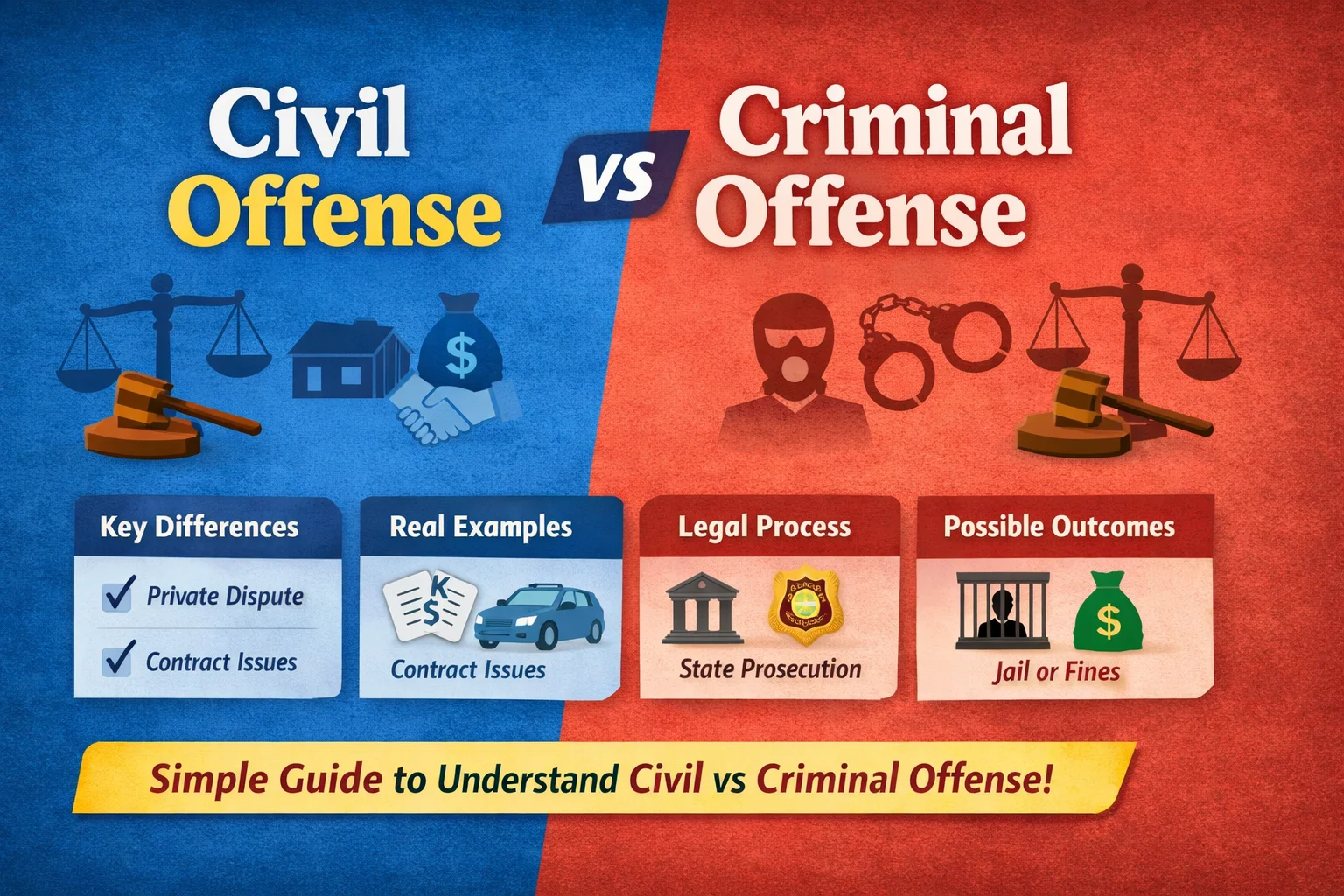
Introduction: Why This Topic Matters
Many people hear the terms civil offense and criminal offense but feel confused. They sound similar, but they are very different in law. Understanding civil offense vs criminal offense is important for everyday life. It helps you know your rights and what can happen in legal situations.
Think of it this way. Some wrong actions harm a person directly. Others harm society as a whole. The law treats these situations differently. That is where civil and criminal law come in.
I have seen many people mix these up. For example, someone may think a small dispute is a crime. Or they may not realize they can file a civil case for compensation. This guide will make everything simple.
In this article, you will learn clear differences, real-life examples, and easy explanations. By the end, you will fully understand civil offense vs criminal offense without any confusion.
What Is a Civil Offense?
A civil offense happens when one person harms another person’s rights. It does not involve a crime against society. Instead, it is a private matter between individuals or organizations.
For example, if someone breaks a contract or damages your property, that is a civil offense. You can take the matter to court. The goal is not punishment. The goal is to get compensation or fix the problem.
Civil cases are very common. They include issues like property disputes, family matters, and business disagreements. These cases help people solve problems in a legal way.
In simple words, a civil offense is about fairness. The court tries to make things right between two parties. That is the core idea in civil offense vs criminal offense.
What Is a Criminal Offense?
A criminal offense is more serious. It is an act that breaks the law and harms society as a whole. The government takes action against the person who committed the crime.
Examples include theft, murder, assault, and fraud. These actions are not just harmful to one person. They affect public safety and order.
In criminal cases, the government prosecutes the accused person. If found guilty, the person may face punishment. This can include jail time, fines, or both.
The main goal here is justice and punishment. The law wants to stop harmful behavior and protect society. This is a key difference in civil offense vs criminal offense.
Key Differences Between Civil and Criminal Offenses
Understanding the core differences is very important. Here is a simple table to help you see the comparison clearly:
| Feature | Civil Offense | Criminal Offense |
|---|---|---|
| Nature | Private dispute | Crime against society |
| Parties involved | Individual vs Individual | Government vs Accused |
| Goal | Compensation | Punishment |
| Outcome | Money or action | Jail, fine, or both |
| Example | Contract dispute | Theft |
This table gives a quick view of civil offense vs criminal offense. It shows how different these two types of law really are.
Who Files the Case?
In civil cases, the affected person files the case. This person is called the plaintiff. They bring the case to court seeking justice or compensation.
In criminal cases, the government files the case. The victim may report the crime, but the state handles the legal action. The accused person is called the defendant.
This difference is important. It shows that criminal offenses are taken more seriously because they impact society.
When comparing civil offense vs criminal offense, always remember who starts the case. It tells you a lot about the nature of the issue.
Burden of Proof Explained Simply
The burden of proof means how much evidence is needed to win a case. This is another big difference.
In civil cases, the proof required is lower. The court decides based on what is more likely true. This is called “balance of probabilities.”
In criminal cases, the proof must be very strong. The guilt must be proven “beyond a reasonable doubt.” This is because the punishment can be severe.
This makes sense when you think about it. Sending someone to jail requires strong proof. This difference is key in civil offense vs criminal offense.
Types of Civil Offenses
Civil offenses come in many forms. Here are some common types:
- Breach of contract
- Property disputes
- Family law issues
- Personal injury claims
- Defamation
For example, if a builder does not complete your house as promised, you can file a civil case. The court may order compensation.
These cases are about resolving disputes peacefully. They help maintain fairness in society.
Understanding these types helps you better grasp civil offense vs criminal offense in real life.
Types of Criminal Offenses
Criminal offenses are also divided into categories. Some common ones include:
- Violent crimes (murder, assault)
- Property crimes (theft, burglary)
- White-collar crimes (fraud, embezzlement)
- Drug-related crimes
Each type has different punishments. The seriousness of the crime decides the penalty.
Criminal law focuses on protecting society. That is why these offenses are treated strictly.
This makes the contrast clear in civil offense vs criminal offense.
Real-Life Examples for Better Understanding
Let’s look at simple examples.
If someone damages your car, you can file a civil case. You may get money to repair it. This is a civil offense.
If someone steals your car, it becomes a criminal offense. The police get involved, and the person may go to jail.
Another example is assault. If someone hurts you physically, it is a crime. But you can also file a civil case for damages.
These examples show how civil offense vs criminal offense can sometimes overlap.
Can One Act Be Both Civil and Criminal?
Yes, one act can lead to both civil and criminal cases.
For example, if someone commits fraud, the government may file a criminal case. At the same time, the victim can file a civil case to recover money.
This means the person may face jail and also pay compensation.
This dual nature is important to understand. It shows that the law works in multiple ways.
This is a key concept when learning civil offense vs criminal offense.
Punishments and Outcomes
The outcomes in both cases are very different. Here is a simple table:
| Outcome Type | Civil Offense | Criminal Offense |
|---|---|---|
| Main Result | Compensation | Punishment |
| Financial Impact | Payment to victim | Fine to government |
| Freedom | No jail | Possible jail |
| Record | Usually no criminal record | Criminal record created |
Civil cases aim to fix harm. Criminal cases aim to punish wrongdoing.
This difference is at the heart of civil offense vs criminal offense.
Legal Process: Step-by-Step Overview
Civil cases usually start with a complaint. Then both sides present their arguments. The judge decides based on evidence.
Criminal cases begin with an investigation. Then charges are filed. The trial follows, and the court gives a verdict.
Criminal cases often take longer. They also involve stricter procedures.
Understanding this process helps you see how serious criminal cases are compared to civil ones.
This is another important aspect of civil offense vs criminal offense.
Why Understanding This Difference Matters
Knowing the difference can protect you. It helps you take the right legal action.
For example, if someone cheats you in business, you should file a civil case. Calling the police may not help.
On the other hand, if someone commits theft, you must report it as a crime.
I have seen people waste time because they did not understand this difference. Learning it can save effort and money.
This makes civil offense vs criminal offense knowledge very practical.
Common Misconceptions
Many people think all wrong actions are crimes. This is not true.
Some believe civil cases are not serious. But they can involve large amounts of money.
Another myth is that criminal cases always go to jail. Sometimes, fines are given instead.
Clearing these misunderstandings helps you see the law clearly.
This is why learning civil offense vs criminal offense is so useful.
How Lawyers Handle These Cases
Lawyers play different roles in both cases.
In civil cases, lawyers help resolve disputes and get compensation. They focus on negotiation and legal arguments.
In criminal cases, lawyers defend or prosecute the accused. They deal with serious charges and strict procedures.
The approach is very different. This reflects the nature of each case.
This also highlights the difference in civil offense vs criminal offense.
FAQs About Civil Offense vs Criminal Offense
1. What is the main difference between civil and criminal offenses?
A civil offense is a private dispute, while a criminal offense is a crime against society.
2. Can I go to jail for a civil offense?
No, civil cases do not lead to jail. They usually involve compensation.
3. Who files a criminal case?
The government files a criminal case against the accused person.
4. Can one act be both civil and criminal?
Yes, some actions can lead to both types of cases.
5. What is the burden of proof in civil cases?
It is lower and based on probability.
6. Why are criminal offenses more serious?
Because they affect public safety and society as a whole.
Conclusion: Take Control of Your Legal Awareness
Understanding civil offense vs criminal offense is not just for lawyers. It is useful for everyone. It helps you know your rights and take the right action when needed.
Civil offenses focus on fairness and compensation. Criminal offenses focus on punishment and public safety. Both play an important role in the legal system.
If you ever face a legal issue, knowing this difference will guide you. It can save time, reduce stress, and help you make smart decisions.
Take a moment to share this knowledge with others. The more people understand the law, the better society becomes.