
 By Carmen Bearden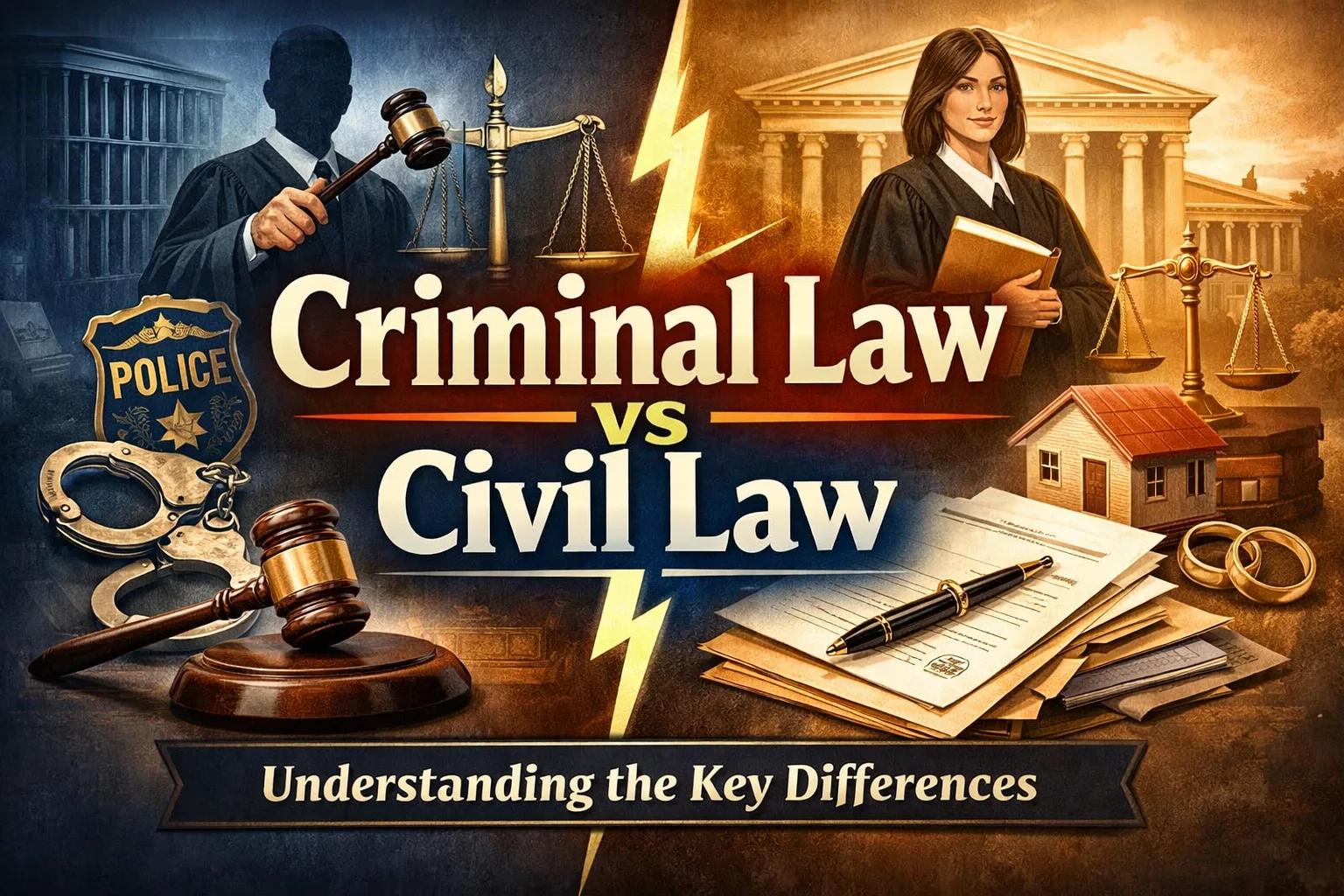
Understanding the legal system can feel confusing. Many people often mix up criminal law vs civil law, but they serve very different purposes. Knowing the difference helps you understand your rights, responsibilities, and how the courts work. Criminal law deals with actions that harm society or break laws, while civil law usually handles disputes between individuals or organizations. In this article, we will explore these differences in detail, give real-life examples, and explain how the legal system works. By the end, you’ll have a clear picture of when a case is criminal or civil, and what that means for everyone involved.
What is Criminal Law?
Criminal law is the branch of law that focuses on punishing people who break laws. Crimes can range from theft and assault to murder. When someone commits a crime, the government prosecutes the person, not another individual. Criminal cases aim to protect society, maintain order, and ensure safety. Punishments can include fines, jail time, probation, or community service. A key point in criminal law is that the accused is innocent until proven guilty. This ensures fairness and prevents wrongful punishment. Real-life examples of criminal law include bank robbery charges or driving under the influence cases.
What is Civil Law?
Civil law handles disputes between private parties, such as individuals, companies, or organizations. These cases usually involve disagreements over money, property, contracts, or personal injuries. Unlike criminal law, civil cases are filed by the person or organization harmed, not the government. The goal is often compensation rather than punishment. For example, if someone slips and falls in a store, they may file a civil lawsuit seeking damages. Civil law also covers family matters like divorce, child custody, and inheritance. While penalties in civil law usually involve paying money, criminal law can include imprisonment.
Key Differences Between Criminal Law and Civil Law
The differences between criminal law and civil law are significant. In criminal law, the government prosecutes the case, whereas in civil law, the victim brings the lawsuit. Criminal cases require proof “beyond a reasonable doubt,” which is a very high standard. Civil cases require a “preponderance of evidence,” meaning it’s more likely than not that one side is correct. Criminal law aims to punish wrongdoers and protect society, while civil law seeks to resolve disputes and compensate victims. Understanding these differences can help you navigate legal issues more confidently.
Who Prosecutes Criminal and Civil Cases?
In criminal law, a public prosecutor or district attorney represents the state or government. Their role is to prove that the accused broke the law. In civil law, the person harmed (plaintiff) hires a lawyer to bring a case against the other party (defendant). Judges and juries play a role in both types of law, but the procedures differ. Criminal courts often follow strict rules because the stakes are high, such as loss of liberty. Civil courts are usually less strict but focus on fairness and compensation. Knowing who is involved helps understand the legal process better.
Examples of Criminal Law Cases
Criminal law covers acts considered harmful to society. Common examples include theft, assault, fraud, murder, drug trafficking, and arson. For instance, if someone steals a car, they face criminal charges filed by the government. Another example is assault; if someone physically harms another person, the court decides the punishment. These cases can lead to jail time, fines, or probation. Criminal law ensures public safety by holding offenders accountable. Even minor offenses, like traffic violations, fall under criminal law if they break the law. Each case has its own procedures, evidence requirements, and consequences.
Examples of Civil Law Cases
Civil law covers disputes between people or organizations. Examples include personal injury lawsuits, property disputes, contract breaches, divorce cases, and debt recovery. For instance, if a contractor fails to complete a project, the client can file a civil lawsuit for damages. Similarly, if a dog bites someone, the victim may seek compensation for medical costs. Civil law is less about punishing someone and more about making the harmed party “whole” again. Settlements often occur outside court, but some cases go to trial. Civil law ensures fairness in daily life and protects legal rights in private disputes.
Burden of Proof: Criminal vs Civil
One major difference between criminal law vs civil law is the burden of proof. In criminal law, prosecutors must prove the defendant’s guilt beyond a reasonable doubt. This is a high standard because criminal penalties are severe. In civil law, the plaintiff must show the defendant is more likely than not at fault. This standard is called “preponderance of evidence.” It’s easier to win a civil case than a criminal case because the level of proof is lower. Understanding this concept helps explain why someone might lose a civil lawsuit but not face criminal charges for the same incident.
Legal Penalties: What Happens if You Lose?
In criminal law, penalties can include prison, probation, fines, community service, or rehabilitation programs. In serious cases, such as murder, the punishment may be life imprisonment or, in some countries, capital punishment. Civil law, on the other hand, focuses on financial compensation. If someone loses a civil case, they may have to pay damages to the victim. Civil courts can also issue injunctions, which are orders to do or stop doing something. The difference in penalties shows that criminal law protects society, while civil law protects individual rights and property.
Role of Judges and Juries
Both criminal and civil cases involve judges, but their roles can differ. In criminal cases, judges oversee the trial, ensure fair procedures, and sometimes decide the sentence. Juries may decide guilt based on evidence. In civil cases, judges often decide the outcome, but juries can also rule in cases like personal injury lawsuits. Understanding who makes decisions is important for participants in the legal system. Judges ensure fairness, while juries represent community judgment. The type of law determines how the trial works, which is why criminal law vs civil law processes can feel very different.
Can a Case Be Both Criminal and Civil?
Yes, some situations involve both criminal and civil law. For example, if someone physically attacks another person, criminal charges might be filed for assault. Simultaneously, the victim could sue for medical costs in civil court. Another example is fraud; the government may prosecute the fraudster, while the victim seeks compensation. Cases like these show how the legal system balances public protection with individual justice. Understanding this overlap helps people know their rights and legal options in complex situations.
Why Understanding the Difference Matters
Knowing the difference between criminal law vs civil law is essential for everyone. It helps you know what legal actions are possible if you are harmed or accused. It also prevents confusion about procedures, penalties, and expectations in court. Being informed empowers people to protect themselves, seek justice, and avoid legal mistakes. For businesses, understanding civil law is crucial to handle contracts and disputes. For society, understanding criminal law helps people recognize crime consequences and public safety responsibilities. Education about law builds trust and fairness in the legal system.
FAQs
1. What is the main difference between criminal law and civil law?
Criminal law punishes crimes against society, while civil law resolves private disputes and compensates victims.
2. Who prosecutes criminal cases?
A public prosecutor or district attorney represents the government in criminal cases.
3. Who can file a civil lawsuit?
Any individual or organization harmed can file a civil lawsuit against another party.
4. Can someone face both criminal and civil charges for the same act?
Yes, acts like assault or fraud may lead to both criminal prosecution and civil lawsuits.
5. What are typical punishments in criminal law?
Criminal penalties can include fines, jail, probation, or community service depending on severity.
6. Are civil cases always about money?
Mostly yes, but civil courts can also issue injunctions to require or prevent certain actions.
Conclusion
Understanding criminal law vs civil law helps people make informed legal decisions. Whether you face a crime, a personal dispute, or a business disagreement, knowing the difference gives clarity and confidence. Criminal law protects society, while civil law protects individual rights. Both are important in maintaining fairness and justice. By learning the basics, you can better navigate legal situations, avoid mistakes, and ensure your rights are respected. Stay informed, seek professional advice when needed, and remember that knowledge of the law is a powerful tool for everyone.