
 By Carmen Bearden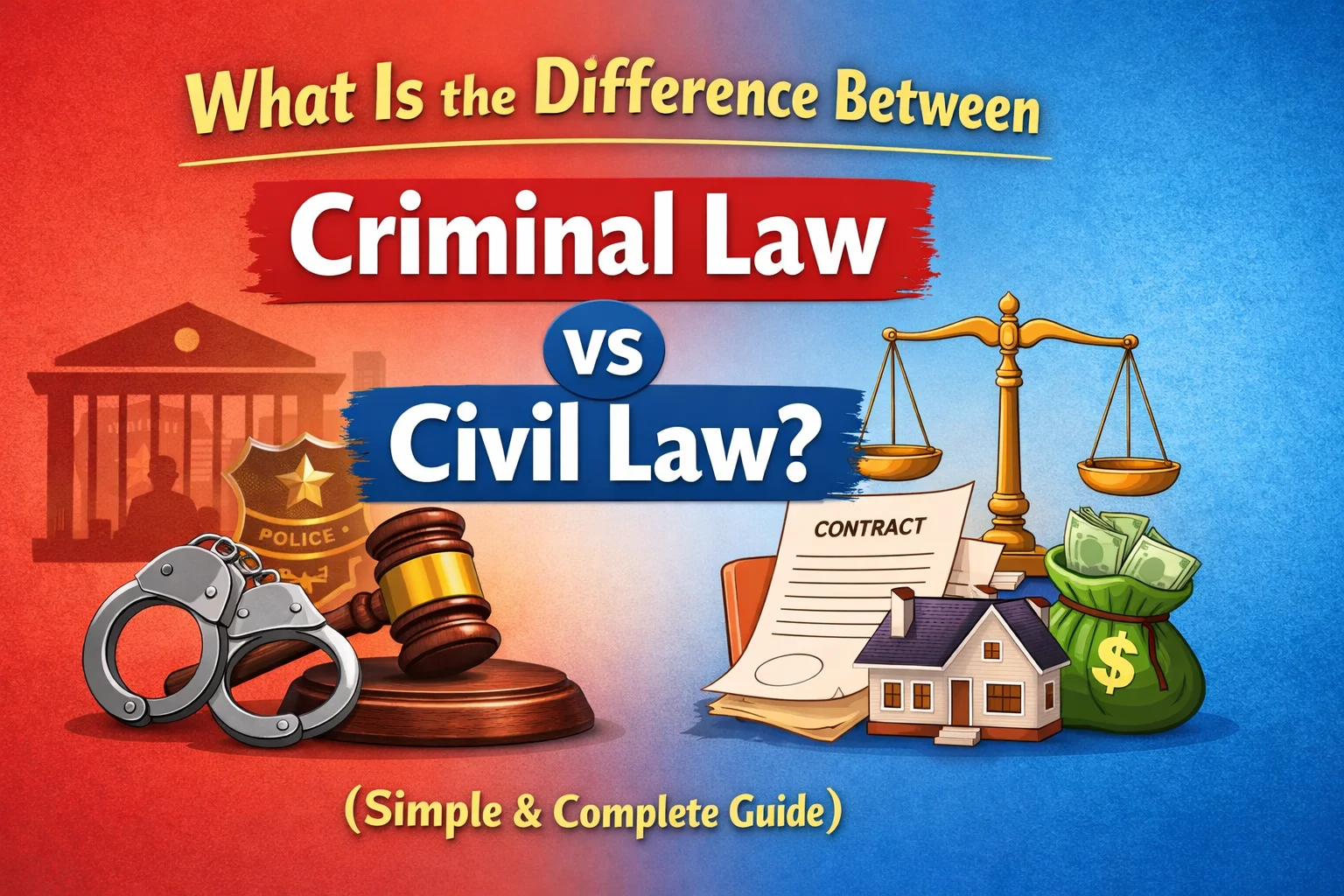
Introduction
Have you ever wondered what is the difference between criminal law and civil law? It’s a common question, especially if you are new to legal topics. At first, both may seem similar because they deal with rules and justice. But in reality, they are very different in purpose, process, and outcome.
Think of it this way. Criminal law deals with actions that harm society as a whole. Civil law focuses on disputes between people or businesses. One can lead to jail. The other usually leads to money compensation.
Understanding what is the difference between criminal law and civil law can help you make better decisions. It also helps you know your rights if you ever face a legal issue.
In this guide, we will explain everything in simple words. You will learn the key differences, real-life examples, and why both types of law are important.
What Is Criminal Law?
Criminal law is a set of rules that deals with crimes. These are actions that harm society, such as theft, murder, or fraud. The government creates and enforces these laws.
When someone breaks criminal law, the state takes action against them. This means the case is usually between the government and the accused person.
The main goal of criminal law is to punish wrong behavior and prevent crime. It also protects people and keeps society safe.
For example, if someone steals a car, the government will file a case. If found guilty, the person may go to jail or pay a fine.
Criminal law is serious because it can affect a person’s freedom. That’s why the court requires strong proof before giving punishment.
What Is Civil Law?
Civil law deals with disputes between individuals or organizations. It focuses on solving problems and giving compensation rather than punishment.
In civil cases, one person sues another. The goal is to fix a wrong, not to send someone to jail.
For example, if someone damages your property, you can file a civil case. You may ask for money to repair the damage.
Civil law covers many areas. These include contracts, property, family matters, and personal injury.
Understanding what is the difference between criminal law and civil law becomes easier when you see this key point. Civil law is about resolving conflicts, not punishing crimes.
Main Purpose: Punishment vs Compensation
The biggest difference lies in purpose.
Criminal law aims to punish offenders. It also tries to stop others from committing similar crimes. The focus is on justice for society.
Civil law, on the other hand, aims to compensate the victim. It tries to fix the harm done.
For example, if a person assaults someone, two cases may arise. The state may file a criminal case. The victim may also file a civil case for damages.
So when asking what is the difference between criminal law and civil law, remember this simple idea. One punishes, the other compensates.
Who Files the Case?
Another key difference is who starts the case.
In criminal law, the government files the case. This is because crimes are seen as offenses against society.
In civil law, the injured person files the case. This person is called the plaintiff.
For example, in a theft case, the state prosecutes the accused. In a contract dispute, one party sues the other.
This difference is important when understanding what is the difference between criminal law and civil law. It shows who takes responsibility for legal action.
Burden of Proof: High vs Lower
The level of proof needed is also different.
In criminal cases, the proof must be very strong. The standard is “beyond a reasonable doubt.” This means there should be no serious doubt about guilt.
In civil cases, the proof standard is lower. It is called “balance of probabilities.” This means the claim is more likely true than not.
This difference exists because criminal punishments are more serious. A person may lose freedom, so the court needs stronger evidence.
When learning what is the difference between criminal law and civil law, this is a major point to remember.
Types of Punishment or Outcome
Criminal law can lead to serious penalties. These include jail time, fines, or even life imprisonment in some cases.
Civil law usually results in financial compensation. The court may order one party to pay money or fulfill a contract.
Sometimes, the court may also order actions like stopping harmful behavior.
For example, in a civil case, a company may be asked to pay damages. In a criminal case, a person may go to prison.
This clearly shows what is the difference between criminal law and civil law in terms of outcomes.
Examples of Criminal and Civil Cases
Let’s look at some simple examples to make things clear.
Criminal cases include theft, assault, murder, and fraud. These acts harm society and break the law.
Civil cases include divorce, property disputes, breach of contract, and personal injury claims.
Imagine a car accident. The driver may face a criminal case if laws were broken. At the same time, the victim may file a civil case for damages.
Real-life situations often involve both types. This helps explain what is the difference between criminal law and civil law in practical terms.
Role of Lawyers in Both Laws
Lawyers play different roles in each type of law.
In criminal law, there are two main sides. The prosecutor represents the government. The defense lawyer represents the accused person.
In civil law, both sides have lawyers. One represents the plaintiff, and the other represents the defendant.
The goal of lawyers is to present facts and argue the case. But their approach may differ based on the type of law.
Understanding this helps deepen your knowledge of what is the difference between criminal law and civil law.
Rights of the Accused vs Rights of Individuals
Criminal law gives special rights to the accused. These include the right to remain silent and the right to a fair trial.
This is because the stakes are very high. A person’s freedom is at risk.
In civil law, both parties have equal rights. The focus is on fairness and resolving the dispute.
Both systems aim to ensure justice. But the protections are stronger in criminal cases.
This is another key point in understanding what is the difference between criminal law and civil law.
Speed and Complexity of Cases
Criminal cases can take a long time. They often involve detailed investigations and strict procedures.
Civil cases may also take time, but some are resolved faster. Many civil disputes are settled outside court.
Settlements save time and money. They are common in civil law.
When comparing what is the difference between criminal law and civil law, this aspect shows how each system works in real life.
Can One Act Lead to Both Cases?
Yes, one act can lead to both criminal and civil cases.
For example, if a person commits assault, the state may file a criminal case. The victim may also file a civil case for compensation.
Both cases run separately. The results may also differ.
This situation clearly explains what is the difference between criminal law and civil law in a real-world context.
Why Both Laws Are Important
Both criminal and civil laws are essential for a fair society.
Criminal law protects people from harmful actions. It ensures safety and order.
Civil law helps resolve disputes peacefully. It gives people a way to seek justice without violence.
Together, they create a balanced legal system. They protect rights and maintain harmony.
Understanding what is the difference between criminal law and civil law helps you see the value of both systems.
Common Misconceptions
Many people think civil cases are less important. But that is not true. Civil law protects everyday rights.
Some also believe criminal cases always mean jail. But sometimes, fines or other penalties are given.
Another myth is that one case cancels the other. In reality, both can exist at the same time.
Clearing these myths helps you better understand what is the difference between criminal law and civil law.
FAQs
1. What is the difference between criminal law and civil law in simple terms?
Criminal law deals with crimes against society. Civil law deals with disputes between individuals.
2. Can a person face both criminal and civil cases?
Yes, one act can lead to both types of cases at the same time.
3. Who files a criminal case?
The government files a criminal case against the accused.
4. What is the main goal of civil law?
The main goal is to compensate the victim and resolve disputes.
5. What kind of proof is needed in criminal cases?
Criminal cases require strong proof beyond a reasonable doubt.
6. Do civil cases involve jail time?
No, civil cases usually involve money or other forms of compensation.
Conclusion
Now you clearly understand what is the difference between criminal law and civil law. While both deal with justice, their goals, processes, and outcomes are very different.
Criminal law focuses on punishment and public safety. Civil law focuses on resolving disputes and compensating victims.
Both systems are important. They work together to create a fair and balanced society.
If you ever face a legal issue, knowing these differences can help you make better decisions. It can also help you understand your rights and options.
Want to learn more about law in simple terms? Keep exploring and build your knowledge step by step.