
 By Carmen Bearden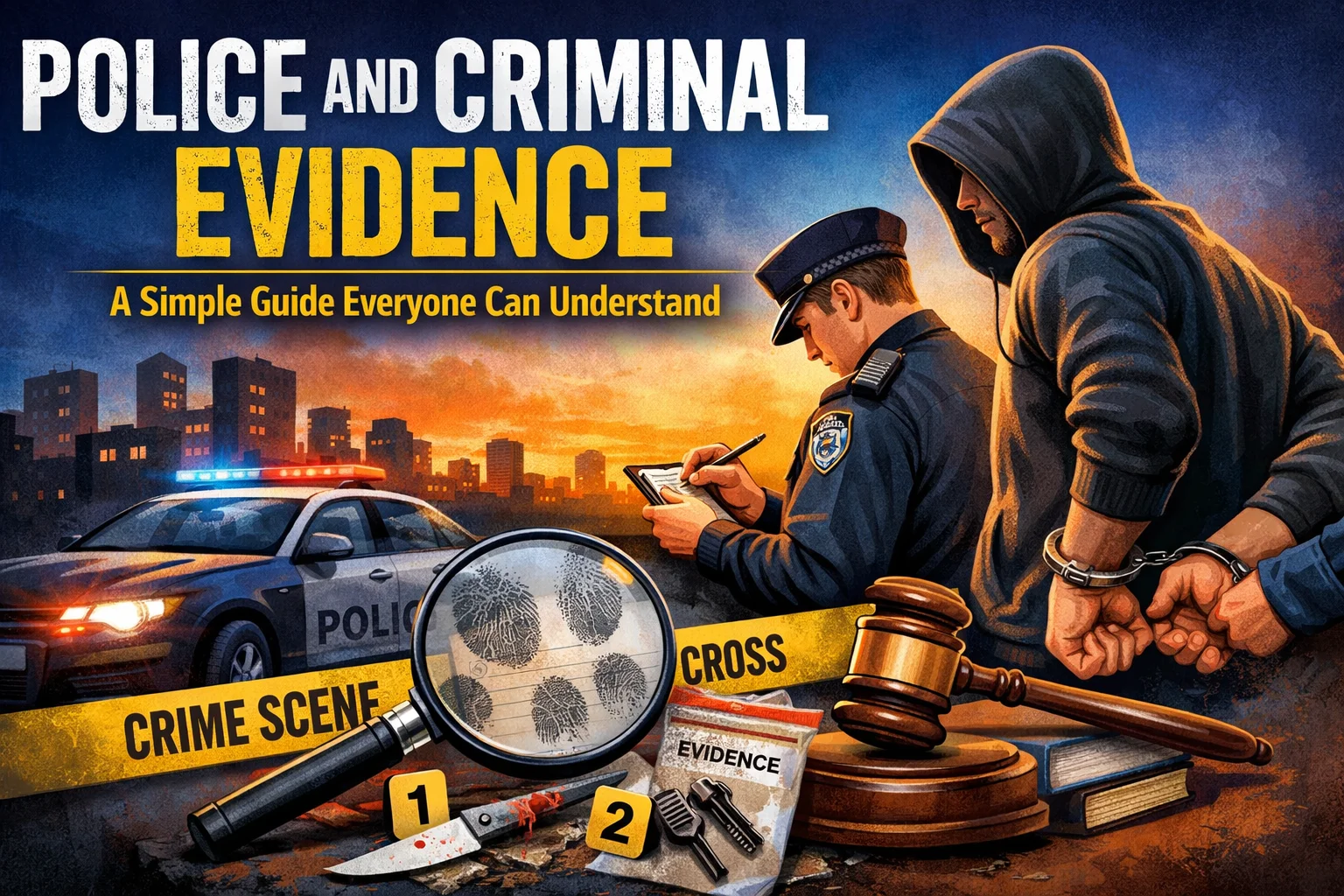
Introduction
When we hear about crimes, we often think about police catching criminals. But how do they prove someone is guilty? The answer is simple: police and criminal evidence. Evidence is what helps tell the real story. It shows what happened, who was involved, and how the crime took place.
This topic may sound complex, but it is not. In fact, understanding police and criminal evidence can help you know your rights. It also helps you see how justice works in real life. From fingerprints to witness statements, every piece of evidence matters.
In this guide, we will break everything down in a very simple way. You will learn how police collect evidence, how it is used in court, and why it is so important. We will also share real-life examples and practical insights so you can relate better.
Let’s start this journey and make this topic easy for everyone.
What Is Police and Criminal Evidence?
Police and criminal evidence refers to anything that helps prove a crime. It can be physical items, digital data, or even what people say. Police collect this evidence to build a case.
Think of evidence like puzzle pieces. Each piece adds to the full picture. Without enough pieces, the story may not make sense. That is why police take this process very seriously.
Evidence must be collected in a legal way. If it is not, it may not be used in court. This rule protects people from unfair treatment. It also ensures that justice is done properly.
For example, if police find a weapon at a crime scene, it becomes evidence. If someone saw the crime happen, their statement is also evidence. Both types help explain what happened.
In simple words, police and criminal evidence is the backbone of any criminal case. Without it, proving guilt becomes very difficult.
Types of Criminal Evidence
There are many types of evidence used in criminal cases. Each type serves a different purpose. Understanding them helps you see how cases are built.
First, there is physical evidence. This includes objects like weapons, clothes, or fingerprints. These items can directly link a person to a crime.
Second, there is testimonial evidence. This comes from witnesses or victims. What they say can help explain the situation. However, human memory is not always perfect.
Third, there is documentary evidence. This includes written or recorded material. Examples are emails, messages, or official records.
Lastly, there is digital evidence. In today’s world, this is very common. Phone data, CCTV footage, and online activity all count.
All these types work together. Police use them to create a strong case. This makes police and criminal evidence a complete system, not just one thing.
How Police Collect Evidence
Police follow strict rules when collecting evidence. This ensures fairness and accuracy. If they make mistakes, the case can fail.
First, they secure the crime scene. This means no one is allowed to enter or disturb it. It helps protect important evidence.
Next, they carefully collect items. They wear gloves and use special tools. This prevents contamination. Every item is labeled and recorded.
They also take photos and videos. This helps show the original condition of the scene. It becomes part of the case record.
In many cases, police also talk to witnesses. They record statements and verify details. This adds another layer of proof.
The process may look simple, but it requires training and care. Proper collection is key to strong police and criminal evidence.
Why Evidence Must Be Handled Carefully
Handling evidence is just as important as collecting it. Even a small mistake can ruin a case.
For example, if evidence is touched without gloves, it may get contaminated. This can make it unreliable. Courts may reject it.
Police use a system called “chain of custody.” This tracks who handled the evidence and when. It ensures nothing is changed or lost.
Every step is documented. From the crime scene to the courtroom, everything is recorded. This builds trust in the system.
Proper handling also protects innocent people. It prevents false accusations. It ensures that only true facts are presented.
This is why police and criminal evidence must always be treated with care and respect.
Role of Forensic Science
Forensic science plays a big role in solving crimes. It uses science to examine evidence. This makes police and criminal evidence stronger.
Experts analyze fingerprints, DNA, and other materials. These tests can link a suspect to a crime scene. Sometimes, they can even identify unknown persons.
For example, DNA evidence can prove if someone was present at a location. It is very accurate and reliable.
Forensic teams also study blood patterns, bullet marks, and more. Each detail helps build the case.
This scientific approach reduces guesswork. It provides clear and strong proof. That is why forensic science is so important today.
Importance of Witness Statements
Witnesses can provide valuable information. They help explain what happened from a human perspective.
However, witness statements are not always perfect. People can forget details or make mistakes. That is why police verify their accounts.
Even with limits, witnesses play a key role. Their statements can support other evidence. Together, they create a complete picture.
For example, a witness may describe a suspect. This can match with CCTV footage or other proof.
In many cases, witness testimony becomes a crucial part of police and criminal evidence.
Digital Evidence in Modern Crimes
Today, many crimes involve technology. That is why digital evidence is very important.
Phones, computers, and cameras store a lot of data. Police can use this data to track activities and locations.
For example, messages can show communication between suspects. GPS data can show where someone was at a certain time.
Social media is also a big source of evidence. Posts, photos, and comments can reveal important details.
However, digital evidence must be handled carefully. It can be easily altered if not protected properly.
This makes digital tools a powerful part of police and criminal evidence in modern cases.
Rules That Protect People
Laws are in place to protect everyone. Police must follow these rules when collecting evidence.
For example, they often need a warrant to search a home. This protects privacy and prevents misuse of power.
If evidence is collected illegally, it may be rejected in court. This rule ensures fairness in the justice system.
These protections are very important. They prevent abuse and protect innocent people.
At the same time, they ensure that police and criminal evidence is reliable and trustworthy.
How Evidence Is Used in Court
Once collected, evidence is presented in court. Lawyers use it to argue their case.
The prosecution tries to prove guilt. The defense tries to challenge the evidence. The judge or jury then decides the outcome.
Each piece of evidence is examined carefully. It must be relevant and legally obtained.
For example, DNA evidence may strongly support a case. But if it was collected improperly, it may not be used.
This shows how important proper procedures are in police and criminal evidence.
Common Mistakes in Evidence Handling
Even trained professionals can make mistakes. These errors can affect the case.
One common mistake is contamination. This happens when evidence is mixed with other materials.
Another issue is poor documentation. If records are incomplete, the evidence may lose value.
Sometimes, evidence is lost or damaged. This can weaken the case significantly.
These mistakes highlight the need for strict procedures. Proper handling ensures strong police and criminal evidence.
Real-Life Example of Evidence Use
Imagine a robbery case. Police arrive at the scene and find fingerprints. They also collect CCTV footage.
A witness reports seeing a suspect. The description matches the person in the video.
Later, police find stolen items in the suspect’s home. All this evidence builds a strong case.
Each piece supports the others. Together, they create a clear story.
This example shows how police and criminal evidence works in real life. It is a combination of different elements.
Why Evidence Matters for Justice
Without evidence, justice cannot be served. It ensures that the right person is held responsible.
It also protects innocent people. Strong evidence prevents false accusations.
In many cases, evidence has helped free wrongly accused individuals. This shows its power and importance.
Justice depends on truth. And truth depends on evidence.
That is why police and criminal evidence is essential in every legal system.
Conclusion
Understanding police and criminal evidence is important for everyone. It helps you see how the justice system works.
From collecting evidence to presenting it in court, every step matters. Each detail plays a role in finding the truth.
We have seen how different types of evidence work together. We also learned how careful handling and legal rules protect fairness.
In today’s world, evidence is more advanced than ever. With forensic science and digital tools, solving crimes has become more accurate.
If you found this guide helpful, share it with others. Learning about these topics can make us more aware and informed citizens.
FAQs
1. What is police and criminal evidence in simple words?
It is anything that helps prove a crime. This includes objects, statements, and digital data.
2. Why is evidence important in a criminal case?
Evidence helps show the truth. It proves whether someone is guilty or innocent.
3. Can evidence be rejected in court?
Yes, if it is collected illegally or handled poorly, it may not be accepted.
4. What is digital evidence?
It is information from devices like phones, computers, or cameras used in investigations.
5. What is the chain of custody?
It is a record showing who handled the evidence from start to finish.
6. Can a person be convicted without evidence?
No, strong evidence is needed to prove guilt in court.