
 By Carmen Bearden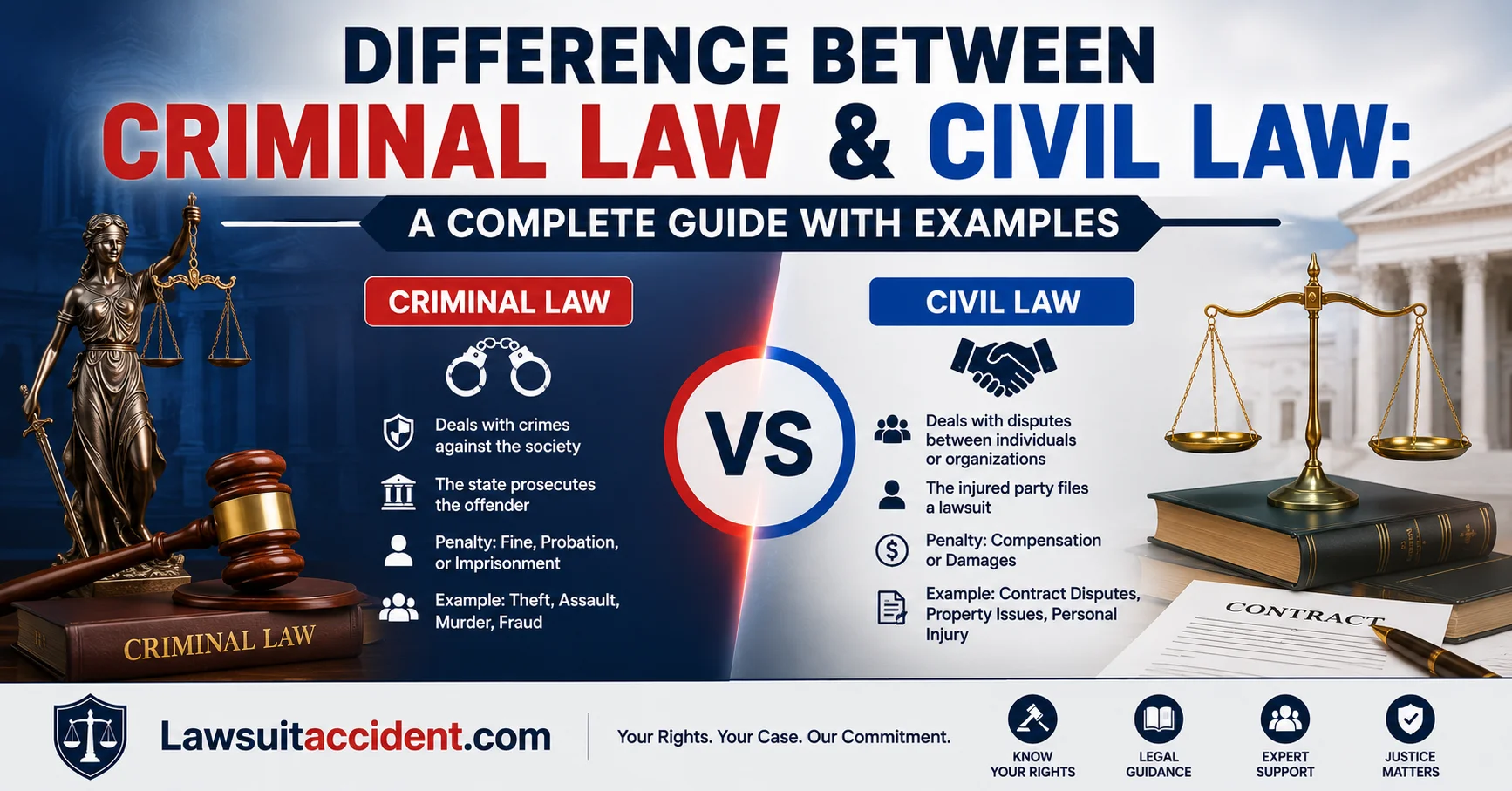
Have you ever wondered why some legal cases send people to prison while others only involve money or compensation? Many people hear the terms difference between criminal and civil law but are not sure what they really mean. At first, both types of law may seem similar because they both deal with legal disputes. However, they serve very different purposes. Understanding these differences can help you better understand your rights, legal responsibilities, and how the justice system works. Whether you are a student, business owner, employee, or simply curious about the law, knowing the basics is useful in everyday life.
In this guide, we will explain everything in simple language. You will learn how criminal law and civil law work, who starts each type of case, what happens in court, and what the possible outcomes are. We will also look at real-life examples, easy comparisons, and practical situations that make the topic easier to understand. By the end of this article, the difference between criminal and civil law will be much clearer.
Why Understanding the Difference Matters
Many people believe that every legal dispute ends with someone going to jail. That is not true. Most legal cases around the world are actually civil cases. These involve disagreements between individuals, companies, or organizations. Criminal cases are different because they involve actions that are considered crimes against society. Even if only one person is harmed, the government usually steps in because the crime affects the public as a whole.
Knowing the difference between criminal and civil law can help you make better decisions in everyday life. For example, if someone damages your property, you may have a civil claim. If someone steals your property, that is usually a criminal offense. Understanding these basic differences can reduce confusion and help you know what legal options may be available.
What Is Criminal Law?
Criminal law is the area of law that deals with crimes committed against society. These crimes include actions that threaten public safety, order, or security. The government creates criminal laws to protect people and punish those who break them.
When someone is accused of committing a crime, the government files charges against that person. A prosecutor represents the state or country, not the victim. The main goal is to determine whether the accused broke the law and should receive punishment.
Some common criminal offenses include:
- Theft
- Assault
- Robbery
- Murder
- Drug trafficking
- Fraud
- Arson
- Kidnapping
If the accused is found guilty, the court may order jail time, probation, community service, fines, or other legal penalties depending on the seriousness of the offense.
What Is Civil Law?
Civil law deals with disputes between individuals, businesses, or organizations. Instead of punishing criminals, civil law focuses on solving disagreements and helping injured parties receive compensation or other legal remedies.
A civil case usually begins when one person believes another person caused harm or failed to meet a legal obligation. The person bringing the lawsuit is called the plaintiff, while the person being sued is called the defendant.
Common civil cases include:
- Contract disputes
- Property disagreements
- Family law matters
- Personal injury claims
- Medical malpractice
- Employment disputes
- Business conflicts
- Landlord and tenant disagreements
Unlike criminal law, civil law usually does not involve prison sentences. Instead, courts often require the losing party to pay money or fulfill certain legal responsibilities.
Criminal Law vs. Civil Law at a Glance
| Feature | Criminal Law | Civil Law |
|---|---|---|
| Main Purpose | Punish crimes | Resolve disputes |
| Who Starts the Case? | Government prosecutor | Private individual or business |
| Who Is the Victim? | Society and individuals | Individual or organization |
| Possible Outcome | Jail, fines, probation | Compensation or court orders |
| Standard of Proof | Beyond a reasonable doubt | Balance of probabilities |
| Main Goal | Protect public safety | Compensate the injured party |
This simple comparison makes the difference between criminal and civil law much easier to understand. While both follow legal procedures, their goals and outcomes are very different.
The Main Purpose of Criminal Law
The biggest goal of criminal law is to protect society. Governments create criminal laws to discourage dangerous behavior and maintain peace. When someone commits a serious crime, the punishment serves several important purposes.
First, punishment helps prevent the offender from committing more crimes. Second, it warns others not to break the law. Third, it provides justice for victims and their families. Finally, it helps maintain public trust in the legal system.
For example, if someone commits armed robbery, the government prosecutes the offender not only because one person suffered but also because society must be protected from similar crimes.
The Main Purpose of Civil Law
Civil law focuses on fairness rather than punishment. When someone suffers financial loss, property damage, or personal injury because of another person’s actions, civil law offers a legal solution.
Instead of asking whether someone deserves jail time, the court asks how the injured person can be fairly compensated. In many cases, money damages are awarded. Sometimes the court orders a person or business to stop certain actions or fulfill a legal agreement.
For example, imagine a contractor fails to complete a home renovation after receiving payment. This situation is generally handled under civil law because the issue involves a broken contract rather than a criminal offense.
Who Brings the Case to Court?
One of the easiest ways to remember the difference between criminal and civil law is to look at who files the case.
In criminal law, the government files charges against the accused. Even if the victim does not want to continue, prosecutors may still move forward because crimes affect society as a whole.
In civil law, the injured person or business decides whether to file a lawsuit. If they choose not to sue, the case usually does not happen.
This difference changes the entire legal process. Criminal prosecutors work to prove that a crime occurred. Civil lawyers work to show that one party caused harm or failed to meet legal obligations.
Real-Life Example That Shows the Difference
Imagine a driver runs a red light and hits another vehicle.
The police discover the driver was heavily intoxicated. Because drunk driving breaks criminal law, the government may charge the driver with a crime. If convicted, the driver could face jail, fines, license suspension, or probation.
At the same time, the injured driver may file a civil lawsuit seeking payment for medical bills, vehicle repairs, lost income, and emotional suffering.
This example clearly shows that one event can lead to both criminal and civil cases. Although they come from the same incident, they have different purposes, different parties, and different outcomes.
The Burden of Proof: One of the Biggest Differences
One of the most important parts of understanding the difference between criminal and civil law is learning about the burden of proof. This term simply means how much evidence is needed before a court can make a decision. Because criminal cases may lead to prison or other serious penalties, the law requires much stronger evidence. The prosecutor must prove the defendant is guilty beyond a reasonable doubt. This is the highest legal standard. If there is reasonable doubt, the defendant must be found not guilty. Civil cases use a lower standard called the balance of probabilities. This means the judge or jury decides which side is more likely to be telling the truth. Since civil cases usually involve money or legal responsibilities instead of prison, this lower standard is considered fair.
Comparing the Burden of Proof
The legal standard used in each type of case changes how lawyers prepare their arguments and how judges or juries evaluate the evidence. The table below makes the comparison easier to understand.
| Legal Standard | Criminal Law | Civil Law |
|---|---|---|
| Level of Proof | Beyond a reasonable doubt | Balance of probabilities |
| Difficulty | Very high | Lower |
| Main Goal | Prevent wrongful convictions | Resolve disputes fairly |
| Decision Based On | Strong evidence of guilt | Which side is more likely correct |
This legal standard is one of the clearest examples of the difference between criminal and civil law because it directly affects the outcome of every case.
What Happens If Someone Is Found Guilty or Responsible?
The results of a case are also very different depending on whether it is criminal or civil. In a criminal case, the court focuses on punishment. If the defendant is convicted, the judge may order imprisonment, probation, community service, fines, or rehabilitation programs. The punishment depends on the seriousness of the crime and the country’s laws. The goal is to protect society, discourage future crimes, and hold offenders accountable for their actions.
Civil cases work differently. Instead of punishment, the court tries to correct the harm that was caused. A judge may order one party to pay financial compensation, return property, honor a contract, or stop certain actions. In many situations, both sides simply want a fair solution rather than a harsh penalty. This difference highlights why civil courts often focus on restoring losses instead of imposing criminal punishments.
Common Types of Criminal Cases
Criminal law covers many different offenses, from minor violations to very serious crimes. Governments classify these offenses based on how harmful they are to society. Some crimes carry small fines, while others may result in many years in prison.
Here are some common criminal cases:
| Crime | Description |
|---|---|
| Theft | Taking another person’s property without permission |
| Assault | Intentionally causing physical harm |
| Robbery | Stealing using force or threats |
| Murder | Unlawfully causing another person’s death |
| Drug Crimes | Possessing, making, or selling illegal drugs |
| Fraud | Deceiving someone for financial gain |
| Burglary | Entering property illegally to commit a crime |
| Cybercrime | Illegal online activities like hacking or identity theft |
Each of these crimes affects not only individual victims but also society. That is why governments prosecute these offenses instead of leaving victims to handle them alone.
Common Types of Civil Cases
Civil law deals with disagreements that usually involve money, property, contracts, or personal rights. These disputes happen every day between individuals, families, and businesses. Most do not involve criminal behavior, even though they may have serious financial consequences.
Some of the most common civil cases include:
| Civil Matter | Example |
|---|---|
| Contract Disputes | A business fails to deliver promised services |
| Personal Injury | A customer slips in a store because of unsafe conditions |
| Property Disputes | Neighbors disagree over land boundaries |
| Family Law | Divorce, child custody, or child support |
| Employment Disputes | Wrongful termination or unpaid wages |
| Medical Malpractice | A healthcare provider causes avoidable harm |
| Consumer Claims | Defective products causing financial loss |
| Landlord-Tenant Issues | Disagreements over rent or property damage |
These examples make the difference between criminal and civil law easier to understand because they show that not every legal dispute involves criminal conduct.
Can One Action Lead to Both Criminal and Civil Cases?
Yes. One event can sometimes result in both a criminal case and a civil lawsuit. This surprises many people, but it happens more often than most realize. The two cases are separate because they have different purposes and different legal standards.
Imagine someone drives while texting and causes a serious accident. Police may file criminal charges if the driver’s behavior broke traffic or criminal laws. At the same time, the injured victim may file a civil lawsuit seeking payment for hospital bills, lost wages, vehicle repairs, and emotional suffering.
The criminal court decides whether the driver deserves punishment. The civil court decides whether the victim should receive compensation. Because of this, a person may lose one case and win the other depending on the evidence and legal standards. This situation clearly demonstrates the difference between criminal and civil law in real life.
The Rights of the Defendant
Although criminal and civil cases are different, both legal systems protect the rights of the people involved. Courts aim to ensure fairness, regardless of the type of dispute. However, criminal defendants receive additional protections because they face the possibility of losing their freedom.
Some important rights in criminal cases include:
- The right to remain silent.
- The right to a lawyer.
- The right to a fair and public trial.
- The right to present evidence.
- The right to question witnesses.
- The right to appeal certain decisions.
Civil defendants also have important legal rights. They can hire a lawyer, respond to claims, present evidence, question witnesses, and appeal court decisions. Even though civil cases usually involve money rather than prison, fairness remains an essential part of the legal system.
Why the Difference Is Important for Everyday People
Many people believe they will never need to understand the legal system, but everyday life often proves otherwise. Buying a house, signing a contract, running a business, driving a car, or even posting online can create legal responsibilities. Knowing the difference between criminal and civil law helps people recognize when an issue involves government prosecution and when it is a private dispute. It also helps individuals understand their rights if they become victims, witnesses, or defendants.
For business owners, this knowledge can reduce legal risks by encouraging better contracts and safer workplaces. For employees, it helps explain workplace rights and responsibilities. Parents can also use this information to teach children about responsible behavior and respect for the law. A basic understanding of these legal principles makes it easier to make informed decisions and avoid unnecessary legal problems.
Criminal Law vs. Civil Law: Detailed Comparison
By now, you should have a good understanding of the difference between criminal and civil law. However, seeing all the major differences in one place makes the topic even easier to remember. Although both areas of law follow legal procedures and use courts to settle cases, they have different goals, different parties, and different outcomes. Criminal law exists to protect society by punishing unlawful behavior, while civil law focuses on resolving disputes and helping injured people recover their losses. Students often use comparison charts because they simplify complex legal concepts into easy-to-understand points. The table below highlights the most important differences you should know.
| Feature | Criminal Law | Civil Law |
|---|---|---|
| Purpose | Punish crimes and protect society | Resolve disputes and compensate victims |
| Who Starts the Case | Government prosecutor | Individual, company, or organization |
| Person Accused | Defendant | Defendant |
| Person Bringing the Case | Government | Plaintiff |
| Standard of Proof | Beyond a reasonable doubt | Balance of probabilities |
| Possible Outcome | Prison, probation, fines, community service | Financial compensation, court orders, injunctions |
| Main Focus | Public safety | Private rights |
| Examples | Murder, robbery, assault, fraud | Contract disputes, divorce, property disputes, negligence |
| Can Both Apply? | Yes | Yes |
This comparison clearly explains the difference between criminal and civil law and shows why both systems are necessary for a fair and balanced justice system.
Common Misconceptions About Criminal and Civil Law
Many people misunderstand how the legal system works because television shows and movies often simplify court cases. In reality, the legal process is more detailed and follows strict rules. Learning the facts helps avoid confusion.
One common myth is that every legal case involves jail time. This is false because civil cases almost never result in imprisonment. Another misunderstanding is that victims always decide whether criminal charges are filed. In many countries, prosecutors make that decision based on the available evidence and the public interest.
Some people also believe that losing a criminal case automatically means losing a civil case. That is not always true because the burden of proof is different. A person might not be convicted in criminal court but could still be held legally responsible in a civil lawsuit. Understanding these facts makes the difference between criminal and civil law much easier to remember.
Real-Life Scenarios to Make It Simple
The easiest way to understand legal concepts is by looking at everyday situations. These examples show how different events fall under criminal law, civil law, or sometimes both.
| Situation | Criminal Law | Civil Law |
|---|---|---|
| Someone steals a bicycle | ✅ Yes | Possible compensation claim |
| Driver causes an accident through negligence | Sometimes | ✅ Yes |
| Business breaks a written contract | ❌ No | ✅ Yes |
| A person commits armed robbery | ✅ Yes | Victim may also sue |
| Neighbor builds a fence on your land | ❌ No | ✅ Yes |
| Employee sues for unpaid wages | ❌ No | ✅ Yes |
| Person commits assault | ✅ Yes | Victim may seek damages |
These situations show that legal problems are not always black and white. Sometimes one action creates both criminal charges and civil claims, depending on the circumstances.
How to Know Which Law Applies
If you ever face a legal issue, asking a few simple questions can help you understand which type of law is involved. First, ask whether the action is considered a crime against society. If the government is prosecuting someone for breaking the law, it is likely a criminal case. If one person is seeking money, compensation, or another legal remedy from another person or business, it is usually a civil case.
Another helpful question is to look at the possible outcome. If the case could lead to imprisonment, probation, or criminal fines, criminal law probably applies. If the likely result is financial compensation, property recovery, or enforcement of a legal agreement, the matter is generally handled through civil law. These simple questions can quickly clarify the difference between criminal and civil law in many real-world situations.
Frequently Asked Questions
1. What is the main difference between criminal and civil law?
The biggest difference between criminal and civil law is their purpose. Criminal law punishes crimes committed against society, while civil law resolves disputes between individuals or organizations and often provides financial compensation.
2. Can one person face both criminal and civil cases?
Yes. A single event can result in both types of legal action. For example, a drunk driving accident may lead to criminal charges from the government and a civil lawsuit from the injured victim.
3. Which type of law has a higher burden of proof?
Criminal law has the higher burden of proof. Prosecutors must prove guilt beyond a reasonable doubt. Civil cases only require proof based on the balance of probabilities.
4. Do civil cases lead to prison?
In most situations, no. Civil cases usually end with financial compensation, court orders, or other legal remedies rather than imprisonment.
5. Why is it important to understand the difference between criminal and civil law?
Understanding the difference between criminal and civil law helps people know their legal rights, recognize different types of legal disputes, and make informed decisions when dealing with contracts, accidents, property issues, or criminal matters.
Conclusion
Understanding the difference between criminal and civil law is valuable for everyone, not just lawyers and law students. These two branches of law work together to keep society safe while also protecting individual rights. Criminal law focuses on punishing behavior that threatens public safety, while civil law helps resolve disagreements and compensate those who have suffered harm. Although they sometimes overlap, each serves a unique purpose within the justice system.
By learning the key differences, the legal standards, the people involved, and the possible outcomes, you can better understand how courts handle different situations. Whether you are signing a contract, running a business, dealing with an accident, or simply expanding your legal knowledge, this information provides a strong foundation. The next time you hear about a court case, you’ll be able to recognize whether it falls under criminal law, civil law, or both—and understand why that distinction matters.