
 By Carmen Bearden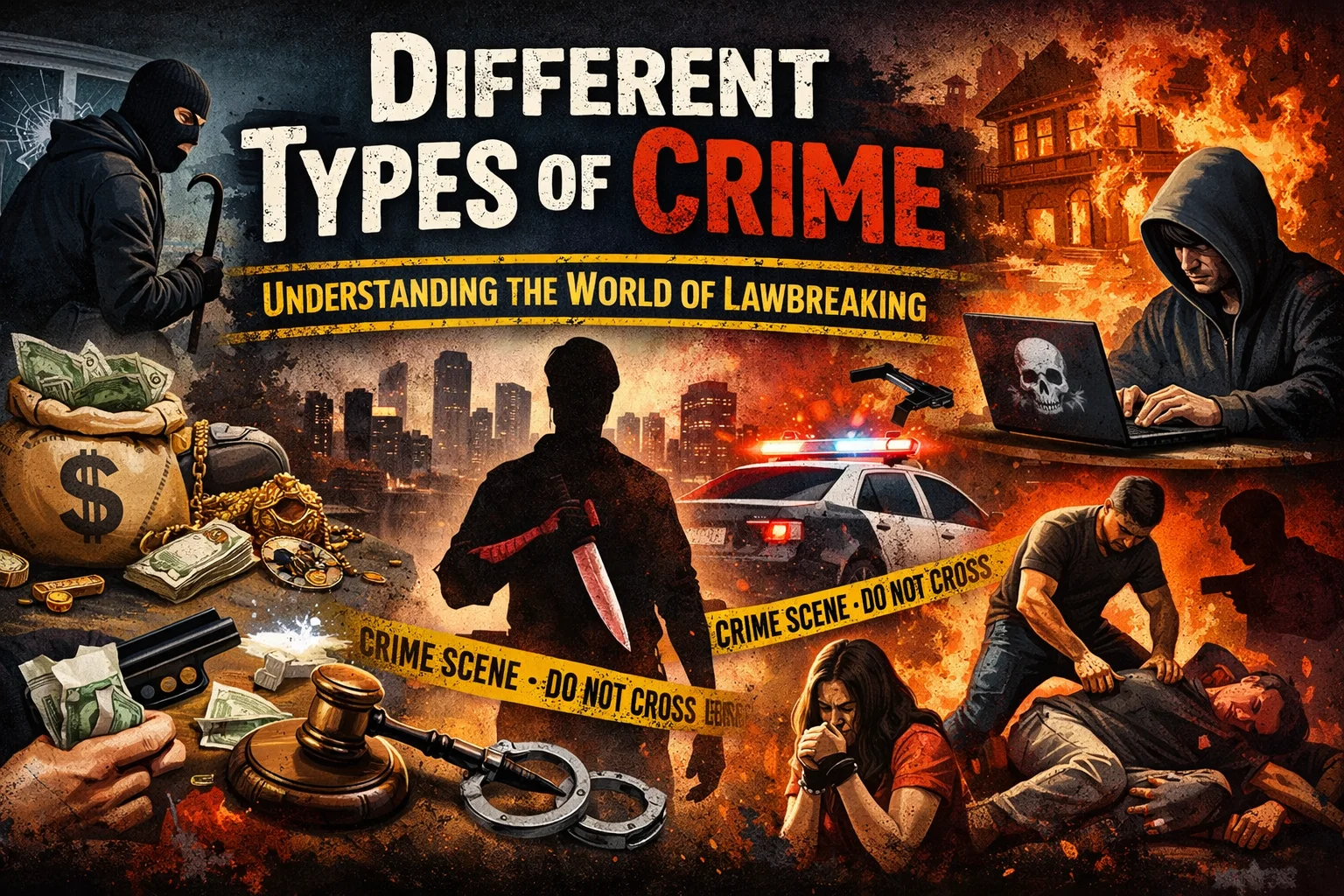
Crime is a topic that impacts everyone, whether directly or indirectly. From news headlines to everyday life, understanding the different types of crime can help us stay safe and make better decisions. But crime isn’t always straightforward—it comes in many forms, each with unique causes, effects, and ways to prevent it. In this article, we’ll explore the main types of crime, their characteristics, examples, and how society deals with them.
Whether you are a student, parent, or just curious, this guide breaks down crime in a simple, friendly way. By the end, you’ll know more about the world of lawbreaking and what to watch out for.
What Is Crime? A Simple Explanation
Crime is any action that breaks the law and harms society. Laws exist to protect people, property, and communities. When someone commits a crime, they face consequences like fines, jail time, or community service.
There are many reasons people commit crimes. Sometimes it’s poverty, sometimes it’s greed, and sometimes it’s simply a mistake. Understanding different types of crime helps law enforcement, policymakers, and ordinary citizens respond better.
Crime can also be categorized based on severity, intention, and the harm caused. For example, stealing a candy bar is different from robbing a bank. By learning the types, we can spot patterns and prevent future crimes.
Violent Crimes: When People Hurt Others
Violent crimes involve physically harming or threatening someone. These crimes are often the most feared because they directly affect a person’s safety.
Examples include:
- Assault: Physically attacking someone
- Murder: Taking someone’s life intentionally
- Robbery: Stealing with violence or threat
- Domestic violence: Abuse within a family or household
Violent crimes leave both physical and emotional scars. Law enforcement takes these crimes seriously, often using strict penalties to deter offenders. Communities also focus on prevention through awareness programs, neighborhood watch groups, and counseling for at-risk individuals.
Property Crimes: Stealing or Damaging Things
Property crimes target someone’s belongings rather than their body. They are more common than violent crimes but can still cause stress and financial loss.
Common property crimes include:
- Burglary
- Theft
- Arson
- Vandalism
| Property Crime | Description | Example |
|---|---|---|
| Burglary | Breaking into a home or building to steal | A thief enters a house at night and takes valuables |
| Arson | Intentionally setting fire | A person burns down a warehouse for insurance |
Even though property crimes don’t always harm people directly, they disrupt lives and create fear in communities. Security measures like alarms, cameras, and neighborhood watch programs help prevent these crimes.
White-Collar Crimes: Hidden But Costly
White-collar crimes are non-violent crimes usually committed in professional or business settings. These crimes often involve money, fraud, or deception.
Examples include:
- Embezzlement
- Tax evasion
- Insider trading
- Identity theft
White-collar crimes can cause huge financial losses for individuals and companies. They often go unnoticed for years, making detection challenging. Authorities rely on audits, regulations, and whistleblowers to catch offenders.
| White-Collar Crime | Victim | Common Method |
|---|---|---|
| Embezzlement | Company or organization | Employee steals money from accounts |
| Identity Theft | Individual | Using someone’s personal info for fraud |
Even though these crimes don’t involve physical harm, they can ruin lives financially and emotionally. Awareness and careful financial management are key preventive measures.
Cybercrime: Crimes in the Digital World
With the internet becoming part of daily life, cybercrime is growing rapidly. Cybercriminals exploit technology to commit offenses.
Examples include:
- Hacking into accounts
- Online scams
- Phishing attacks
- Cyberstalking
Cybercrime can target individuals, businesses, or even governments. The damage ranges from stolen passwords to major data breaches. Preventing cybercrime involves strong passwords, careful sharing of information, and keeping software up-to-date.
Organized Crime: Groups Behind the Scenes
Organized crime involves groups or networks carrying out illegal activities systematically. These crimes are often planned, secretive, and involve multiple people.
Common organized crimes include:
- Drug trafficking
- Human trafficking
- Illegal gambling
- Smuggling
These crimes can harm entire communities and affect governments. Law enforcement agencies use specialized teams to track and dismantle these criminal organizations. Public cooperation is also crucial, as witnesses and community tips help fight these crimes.
Victimless Crimes: Harm Without a Direct Victim?
Victimless crimes are actions considered illegal but don’t directly harm another person. Examples are often controversial.
Examples include:
- Drug use
- Gambling
- Public intoxication
These crimes challenge the legal system because they involve personal choice rather than clear victims. Governments use education, rehabilitation programs, and regulations to reduce the harm associated with these crimes.
Hate Crimes: Targeting People for Who They Are
Hate crimes occur when someone is targeted based on race, religion, gender, sexual orientation, or other personal traits.
Examples include:
- Physical attacks
- Vandalism of cultural sites
- Threatening messages or harassment
Hate crimes affect entire communities, not just the immediate victim. Lawmakers create harsher penalties for these crimes to protect society. Education, awareness campaigns, and community programs are essential to combat hatred and prejudice.
Environmental Crimes: Breaking Rules for Nature
Environmental crimes involve harming the environment illegally. These can affect air, water, wildlife, and public health.
Examples include:
- Illegal dumping of toxic waste
- Poaching endangered animals
- Deforestation without permits
These crimes are serious because they impact both nature and humans. Authorities rely on environmental laws, inspections, and public reporting to prevent these offenses. Everyone can help by being conscious of their environmental footprint.
Juvenile Crimes: When Young People Break the Law
Juvenile crimes involve minors who commit offenses. These crimes often differ in nature from adult crimes and may include petty theft or vandalism.
Authorities handle juvenile crimes differently, focusing on rehabilitation rather than punishment. Programs like counseling, mentoring, and community service aim to guide young offenders back to positive paths.
Cybersecurity and Crime Prevention Tips
Staying safe from crime involves awareness, caution, and preventive measures. Here are some tips for different crime types:
- Property crime: Use locks, alarms, and cameras.
- Cybercrime: Update passwords, avoid suspicious links.
- Violent crime: Stay in safe areas, report threats.
- Fraud and scams: Verify sources, review financial statements.
Simple steps can make a big difference in reducing risk. Communities and individuals together can create safer environments.
FAQs About Different Types of Crime
1. What is the most common type of crime?
Property crimes like theft and burglary are the most frequent worldwide.
2. How are white-collar crimes punished?
They usually involve fines, restitution, and sometimes jail time.
3. Can cybercrime happen to anyone?
Yes, anyone using digital devices is at risk.
4. Are juvenile crimes treated the same as adult crimes?
No, they focus more on rehabilitation than punishment.
5. How can I protect myself from organized crime?
Avoid involvement, report suspicious activity, and cooperate with authorities.
6. Why are hate crimes punished more severely?
They harm not only the victim but also entire communities and social harmony.
Conclusion: Staying Safe and Informed
Understanding the different types of crime helps us stay safe and make smart decisions. Crime comes in many forms—violent, property-related, cyber, white-collar, or environmental—and each has unique consequences. By learning about these crimes, taking preventive steps, and spreading awareness, we can protect ourselves, our families, and our communities.
Remember, knowledge is power. Stay alert, stay informed, and act responsibly. Everyone can play a role in reducing crime and building safer communities.