
 By Carmen Bearden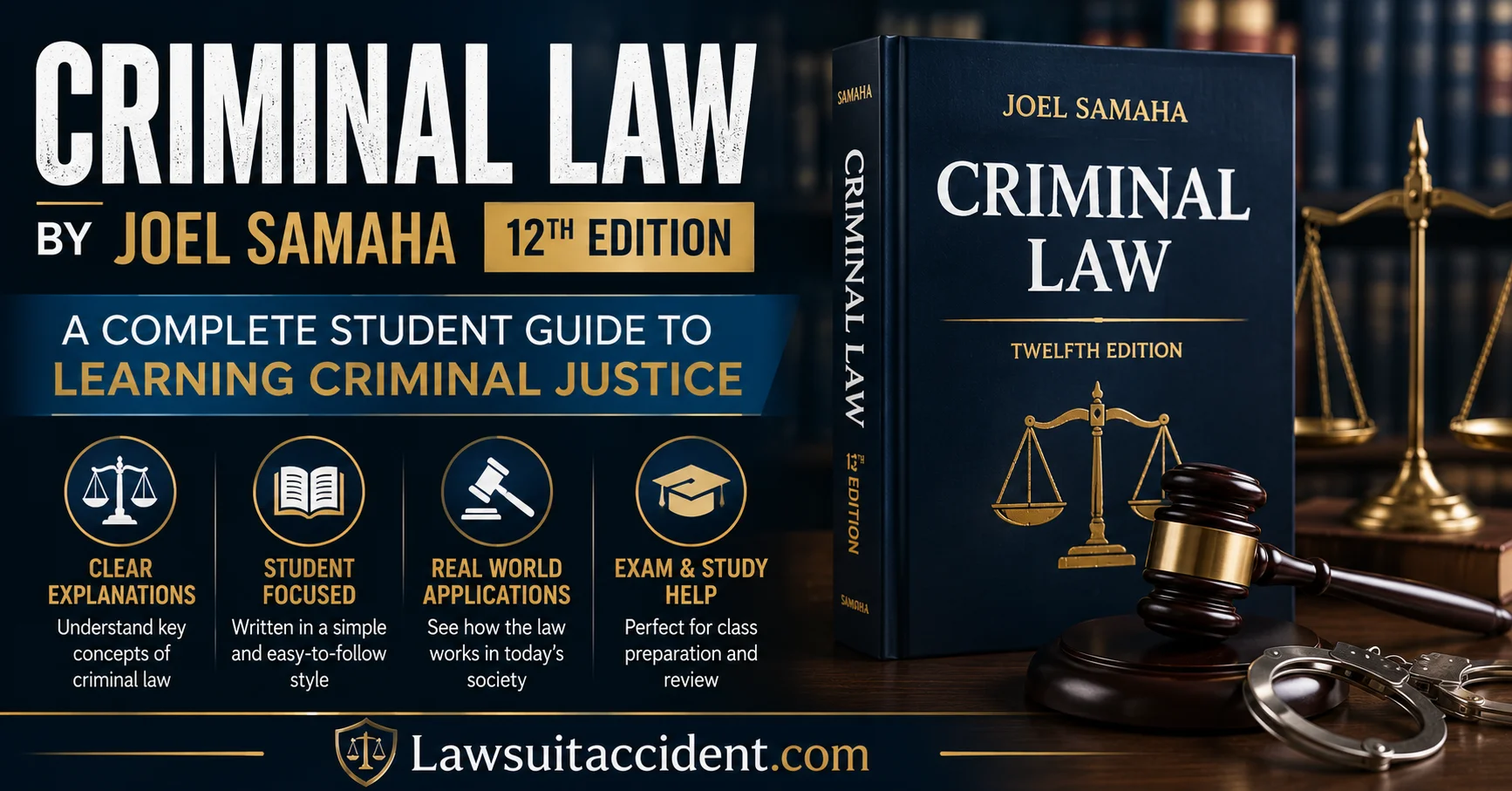
Criminal law can seem difficult at first. It includes legal terms, court rules, and many important ideas. That is why many students choose criminal law by Joel Samaha 12th edition as their main study resource. This textbook explains complex legal concepts in simple language, making it easier for beginners to understand how the criminal justice system works.
Whether you are studying criminal justice, preparing for exams, or simply want to learn about criminal law, this book provides a strong foundation. It combines real court cases, legal principles, and practical examples that connect classroom learning with real-world situations. Many colleges and universities recommend it because of its balanced and student-friendly approach.
In this guide, you’ll discover what makes this edition unique, what topics it covers, who should read it, and how to get the most value from it. You’ll also find useful tables and practical study tips to help you succeed.
Why Is Criminal Law by Joel Samaha 12th Edition So Popular?
Many law textbooks are filled with technical language that can overwhelm new students. Criminal law by Joel Samaha 12th edition takes a different approach. The author explains legal concepts in a way that is easy to understand while still providing enough detail for college-level learning.
The book encourages readers to think critically rather than simply memorize legal definitions. Throughout each chapter, students encounter real court decisions, discussion questions, and practical examples. These features make learning more engaging and help readers understand how criminal law affects everyday life.
Another reason for its popularity is its balanced presentation. Instead of promoting one viewpoint, the book explores different legal opinions and explains why courts sometimes reach different decisions. This helps students develop analytical thinking skills that are valuable both in school and in future legal careers.
Quick Overview
| Feature | Details |
|---|---|
| Book Title | Criminal Law by Joel Samaha 12th Edition |
| Author | Joel Samaha |
| Subject | Criminal Law |
| Intended Audience | Criminal Justice and Law Students |
| Reading Level | Beginner to Intermediate |
| Learning Style | Case-based and Practical |
| Common Use | College Courses and Self-Study |
About the Author: Joel Samaha
Joel Samaha is widely respected for making legal education more accessible. His writing style focuses on clarity, practical examples, and real-life court cases instead of complicated legal jargon. Over the years, his textbooks have been adopted by many criminal justice programs because they help students build confidence while learning challenging topics.
One of Samaha’s strengths is his ability to explain both legal theory and its practical application. Rather than presenting laws as isolated rules, he demonstrates how judges, prosecutors, defense attorneys, and law enforcement officers interpret those laws in actual situations.
Many instructors appreciate that his books encourage discussion and critical thinking. Students often find that his explanations make difficult legal concepts feel manageable, even if they have no previous legal background.
What Makes the 12th Edition Different?
Every new edition of a law textbook aims to reflect changes in the legal system. Criminal law by Joel Samaha 12th edition includes updated court decisions, revised legal discussions, and modern examples that better reflect today’s criminal justice environment.
The 12th edition also improves readability. Several chapters have been reorganized to create a smoother learning experience. Important legal principles are highlighted with examples that show how courts apply them in real cases.
In addition, the updated edition discusses recent developments affecting criminal law, helping students understand how laws continue to evolve. This makes the textbook valuable not only for passing exams but also for understanding current legal issues.
Improvements in the 12th Edition
| Earlier Editions | 12th Edition Improvements |
|---|---|
| Older court cases | More recent legal decisions |
| Basic examples | Updated real-world scenarios |
| Traditional chapter flow | Better organized content |
| Limited modern issues | Expanded current legal topics |
| Older legal references | Updated legal discussions |
Main Topics Covered in the Book
One reason criminal law by Joel Samaha 12th edition remains popular is its broad coverage of criminal law fundamentals. Instead of focusing on only one area, it walks students through the entire legal process, from understanding crime to criminal responsibility and legal defenses.
The chapters are arranged logically, allowing readers to build knowledge step by step. Beginners start with basic legal principles before moving into more advanced concepts. This gradual approach helps reduce confusion and improves long-term understanding.
Some chapters also include review questions and case studies that encourage readers to apply what they have learned rather than simply reading definitions.
Major Topics Included
| Topic | What Students Learn |
|---|---|
| Foundations of Criminal Law | Basic legal principles |
| Elements of Crime | Actus reus and mens rea |
| Criminal Responsibility | Who can be held liable |
| Legal Defenses | Self-defense, insanity, necessity |
| Property Crimes | Theft, burglary, robbery |
| Violent Crimes | Assault, homicide |
| Inchoate Crimes | Attempt, conspiracy, solicitation |
| Sentencing | Punishment and criminal penalties |
Who Should Read Criminal Law by Joel Samaha 12th Edition?
Although this textbook is commonly assigned in college classrooms, it is not limited to university students. Anyone interested in understanding criminal law can benefit from reading it.
Students pursuing criminal justice degrees often use it as a core learning resource. Future police officers, probation officers, correctional professionals, and paralegals also find it useful because it explains the legal principles behind their work.
Even readers with no legal background can appreciate the book’s clear explanations. If you enjoy learning about court cases, legal rights, or how criminal laws are created and enforced, this textbook offers valuable insights without requiring prior legal knowledge.
For independent learners, criminal law by Joel Samaha 12th edition serves as an excellent introduction to one of the most important areas of the legal system.
How the Book Explains Criminal Law in Simple Terms
One of the biggest strengths of criminal law by Joel Samaha 12th edition is its easy-to-follow writing style. Many legal textbooks use difficult words and long explanations. This book takes another path. It breaks down each topic into small, understandable sections. That makes learning less stressful for new students.
The author also uses real court cases to explain legal rules. Instead of reading only legal definitions, students see how judges apply the law in actual situations. This method helps readers remember concepts longer because they connect ideas with real examples. After each chapter, review questions encourage students to think critically instead of simply memorizing information. This practical learning style is one reason instructors continue to recommend the book in criminal justice programs.
Learning Features Included
| Feature | Benefit for Students |
|---|---|
| Real court cases | Connects theory with practice |
| Chapter summaries | Makes revision easier |
| Review questions | Tests understanding |
| Legal definitions | Explains important terms clearly |
| Examples | Shows how laws work in real life |
| Organized chapters | Improves learning flow |
Understanding the Elements of a Crime
Every criminal offense has specific parts that prosecutors must prove in court. Criminal law by Joel Samaha 12th edition explains these elements in a clear and logical order. Students first learn that a crime usually requires both a criminal act and a guilty state of mind.
The book introduces important legal concepts such as actus reus (the criminal act) and mens rea (criminal intent). Instead of simply defining these terms, it uses real situations to show why both elements matter. Readers learn that a person may perform an act without criminal intent or may have criminal intent without completing the act. Courts often examine both factors before deciding whether someone is legally responsible. These examples help students understand why criminal cases are rarely as simple as they appear.
Basic Elements of Crime
| Element | Meaning |
|---|---|
| Actus Reus | The criminal act |
| Mens Rea | Criminal intent or guilty mind |
| Causation | The act caused the harm |
| Harm | Injury or damage occurred |
| Concurrence | Intent and action happened together |
Legal Defenses Explained Clearly
Not every person charged with a crime is legally guilty. One valuable section of criminal law by Joel Samaha 12th edition focuses on legal defenses that may reduce or eliminate criminal responsibility.
The textbook explains defenses such as self-defense, insanity, duress, necessity, and mistake of fact. Each defense includes court examples showing when it applies and when it does not. Students also learn that simply claiming a defense is not enough. Courts carefully examine the facts before accepting it.
The author encourages readers to think about fairness as well as legality. For example, self-defense may be justified in one situation but rejected in another depending on the level of threat. This balanced discussion helps students appreciate how judges interpret the law based on evidence rather than emotion.
Common Criminal Defenses
| Defense | Purpose |
|---|---|
| Self-Defense | Protecting oneself from immediate harm |
| Insanity | Lack of legal responsibility due to mental condition |
| Duress | Forced to commit a crime by threats |
| Necessity | Preventing greater harm |
| Mistake of Fact | Honest misunderstanding of facts |
| Consent | Accepted in limited situations |
Why Real Court Cases Improve Learning
Many students remember stories better than definitions. That is why criminal law by Joel Samaha 12th edition includes numerous court cases throughout the chapters. These cases demonstrate how judges interpret laws differently depending on the facts presented.
For example, two cases involving similar crimes may produce different outcomes because the evidence, intent, or circumstances are not the same. Reading these examples teaches students that criminal law involves careful reasoning rather than simple rule-following.
The case studies also introduce readers to legal arguments from both prosecutors and defense attorneys. This balanced approach encourages critical thinking and prepares students for classroom discussions, assignments, and exams. Instead of accepting one answer, readers learn to analyze multiple viewpoints before reaching a legal conclusion.
Study Tips for Students Using This Textbook
Reading a law textbook can feel overwhelming if you try to memorize every page. Criminal law by Joel Samaha 12th edition becomes much easier when students use effective study habits.
Start by reading one chapter at a time and writing short summaries in your own words. Highlight only the most important legal concepts instead of marking every sentence. After finishing each chapter, answer the review questions without looking back at the text. This helps strengthen your understanding.
Another useful strategy is to create flashcards for important legal terms and court cases. Discussing difficult topics with classmates can also improve memory. Many successful students review chapters several times instead of reading the entire book only once. Small daily study sessions often produce better results than long sessions before an exam.
Effective Study Plan
| Study Activity | Recommended Frequency |
|---|---|
| Read one chapter | Weekly |
| Review notes | Daily |
| Practice review questions | After each chapter |
| Make flashcards | Weekly |
| Group discussion | Before exams |
| Chapter revision | Every weekend |
Common Challenges Students Face
Although criminal law by Joel Samaha 12th edition is easier to read than many law textbooks, some students still find certain topics challenging. Legal terminology, court procedures, and different types of criminal intent may seem confusing during the first few chapters.
The good news is that these challenges usually become easier with practice. Students should not worry if they do not understand every concept immediately. Criminal law builds step by step, and each chapter supports the next one.
Many learners improve by reviewing chapter summaries before moving forward. Watching classroom lectures, participating in discussions, and solving practice questions also reinforce important ideas. Over time, legal language becomes more familiar, and students gain confidence in understanding criminal law concepts.
By staying consistent and using the learning tools provided in the book, readers can successfully master even the more difficult sections.
Is Criminal Law by Joel Samaha 12th Edition Worth Buying?
For most criminal justice students, criminal law by Joel Samaha 12th edition is a worthwhile investment. The book is written for learning, not just for passing exams. It explains legal principles in simple language while still providing enough depth for college courses. Many students continue using it even after finishing the class because it serves as a reliable reference.
Another advantage is that the textbook balances legal theory with practical examples. Instead of reading only definitions, students see how laws apply in real court cases. This approach makes the material easier to understand and remember. If you plan to work in law enforcement, corrections, legal studies, or criminal justice, this book can continue to be useful long after graduation.
Pros and Cons
| Pros | Cons |
|---|---|
| Easy-to-read language | Large textbook |
| Updated legal cases | Can be expensive when new |
| Excellent for beginners | Some chapters require careful reading |
| Strong chapter organization | Covers many detailed legal topics |
| Helpful review questions | Not a substitute for legal advice |
Tips for Getting the Most From This Book
Simply reading a textbook once is rarely enough. To gain the full benefit of criminal law by Joel Samaha 12th edition, create a regular study routine. Read one chapter at a time and focus on understanding the ideas instead of memorizing every sentence.
Keep a notebook for important legal terms and summarize each chapter in your own words. Reviewing these notes every week helps improve long-term memory. When you encounter a court case in the book, ask yourself why the judge reached that decision. This habit strengthens critical thinking skills.
You can also discuss difficult topics with classmates or instructors. Teaching a concept to someone else is often one of the best ways to confirm that you truly understand it. Small, consistent study sessions usually produce better results than last-minute cramming before exams.
Final Thoughts
If you are searching for a beginner-friendly criminal law textbook, criminal law by Joel Samaha 12th edition deserves serious consideration. It combines clear explanations, practical examples, and real court cases into one well-organized resource. Instead of overwhelming readers with complicated legal language, it builds knowledge step by step.
The book is especially valuable for criminal justice students, future law enforcement professionals, paralegals, and anyone interested in understanding how criminal law works. Its balanced discussion of legal principles encourages readers to think critically while developing a solid understanding of the justice system.
Although no single textbook can answer every legal question, this edition provides an excellent foundation for learning. Whether you are preparing for exams or expanding your legal knowledge, it remains one of the most trusted resources available for students.
Frequently Asked Questions
1. What is criminal law by Joel Samaha 12th edition about?
It is a college-level textbook that introduces the principles of criminal law. The book explains crimes, legal defenses, criminal responsibility, court decisions, and sentencing using simple language and real legal examples.
2. Who should read criminal law by Joel Samaha 12th edition?
The book is ideal for criminal justice students, law students, police academy trainees, paralegal students, and anyone interested in learning the basics of criminal law.
3. Is criminal law by Joel Samaha 12th edition suitable for beginners?
Yes. One reason criminal law by Joel Samaha 12th edition is so popular is its beginner-friendly writing style. The author explains difficult legal ideas using everyday language and practical examples.
4. Does the 12th edition include updated legal information?
Yes. The 12th edition includes updated court decisions, revised legal discussions, and modern examples that reflect changes in criminal law and the criminal justice system.
5. Can this book help with college exams?
Absolutely. The textbook contains chapter summaries, review questions, case studies, and practical examples that help students prepare for quizzes, assignments, and final examinations.
6. Is criminal law by Joel Samaha 12th edition useful after graduation?
Yes. Many graduates keep the book as a reference because it provides clear explanations of important criminal law concepts that remain useful in criminal justice and legal careers.