
 By Carmen Bearden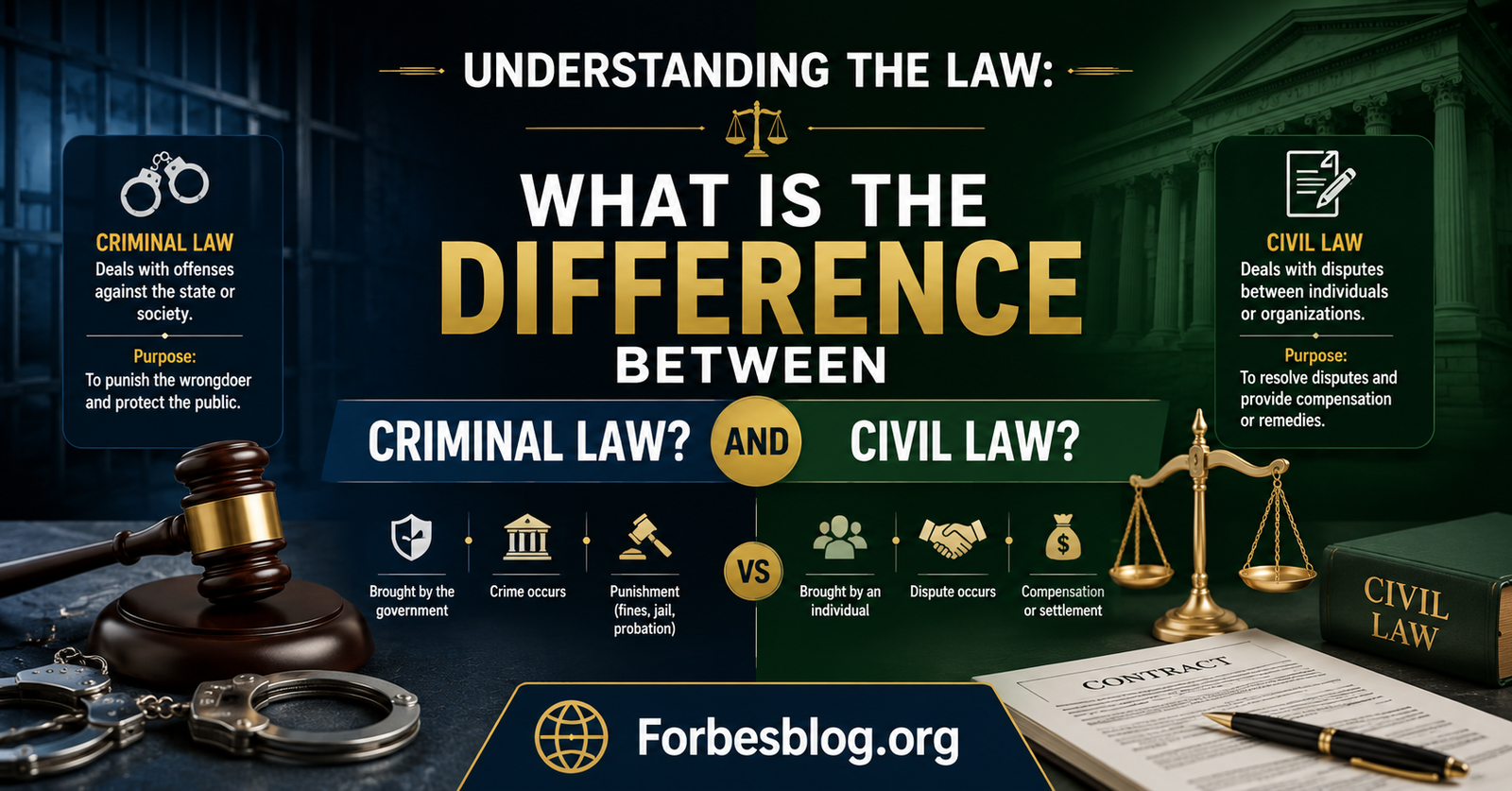
Have you ever wondered why some people go to jail while others just pay fines? The answer lies in the two main types of legal systems. Understanding the difference between criminal and civil law is a great way to see how our society keeps things fair. Most of us go through our lives without needing a lawyer, but knowing these basics can help you understand the news or even a TV show. Law might seem like a giant, scary puzzle, but it really comes down to two simple ideas: safety and fairness. Let’s break down exactly how these two systems work to protect us every single day.
What is Criminal Law?
Criminal law is all about keeping the community safe from dangerous behavior. When someone breaks a law that protects the public, like stealing or hurting someone, that is a crime. The government is always the one who starts a criminal case. They believe a person has harmed society, so they file charges against them. The main goal here is to punish the person who did the wrong thing. This helps make sure that people think twice before they break the law again. It is a very serious part of our legal world.
What is Civil Law?
Civil law is quite different because it deals with private disagreements between people or companies. Think of a fight over a broken contract or an argument about who owns a piece of land. No one is usually going to jail in these cases. Instead, the goal of civil law is to fix a problem or pay back someone who was hurt. It is like a referee deciding who is right in a private argument. People use civil courts to get money for damages or to force someone to do what they promised.
Who Starts the Legal Case?
In a criminal case, the government is the one leading the charge. You might hear people call them the “prosecution.” They investigate the crime and decide if they have enough proof to go to court. On the other hand, a civil case starts because a regular person or business decides to sue another party. In this situation, the person who starts the case is called the “plaintiff.” The plaintiff is the one who says, “You hurt me or my business, and you need to pay for it.”
Different Rules for Winning
One huge difference between criminal and civil law is how much proof you need to win. In a criminal trial, the government must prove the person is guilty “beyond a reasonable doubt.” This is a very high bar because the person could lose their freedom. In a civil case, the rules are much easier. The plaintiff only needs to show that it is “more likely than not” that the other person is responsible. This is often called the “preponderance of the evidence.” It makes winning a civil case much easier than a criminal one.
The Role of Punishment and Money
If you lose a criminal case, the punishment is usually very harsh. You might have to pay a big fine, do community service, or even go to prison. The main point is to punish the wrongdoer for harming the public. In a civil case, the outcome is different. The loser usually has to pay money to the winner to make up for the damage. Sometimes, the court might just order someone to fix a wall or return a stolen item. It is all about “making things right” rather than just handing out punishment.
Can One Act Be Both?
It is actually possible for the exact same action to be both a crime and a civil issue. Imagine someone hits your car on purpose. The police might charge them with a crime for being dangerous on the road. That is the criminal side. At the same time, you can sue that person in civil court to make them pay for your car repairs. These are two separate paths. The difference between criminal and civil law means you can be found “not guilty” in a criminal court but still be forced to pay up in a civil court.
The Right to a Lawyer
Our Constitution gives people special rights if they are accused of a crime. One of the most important is the right to a lawyer. If you are charged with a crime and cannot afford a lawyer, the government will give you one for free. This is because the stakes are so high. In a civil case, there is no automatic right to a free lawyer. If you get sued or want to sue someone, you have to find and pay for your own legal help. This makes the civil process a bit more challenging for most people.
How Juries Work in Each System
In many criminal cases, the defendant has the right to a trial by a jury. The jury must usually reach a “unanimous” decision, meaning every single person must agree that the defendant is guilty. If even one person disagrees, the trial might end in a “hung jury.” In civil cases, juries are less common, and they do not always have to be unanimous. Sometimes, just a majority of the jury is enough to make a final decision. This is another key difference between criminal and civil law that affects how justice is served.
Examples of Criminal Law
To understand criminal law better, think about the laws we see on the news. Murder, robbery, arson, and assault are all classic examples. These crimes are seen as attacks on the whole community. Even if a theft only hurts one person, the law says it hurts everyone by making people feel unsafe. This is why the state prosecutes these cases instead of the victim. The state acts as the protector of all citizens by holding these offenders accountable for their dangerous or illegal choices.
Examples of Civil Law
Civil law handles the “day-to-day” disputes that happen in life. Common examples include a landlord suing a tenant for unpaid rent or a person suing their neighbor because a tree fell on their fence. Divorce and child custody battles are also huge parts of the civil law world. In these cases, the court is not trying to find a criminal; they are trying to solve a personal disagreement. They look at contracts, property rights, and family rules to decide what is the fairest path forward for everyone involved.
Quick Comparison Table: Civil vs. Criminal
| Feature | Criminal Law | Civil Law |
| Who starts it? | The Government | A private person or business |
| Main Goal | Punishment | Compensation (Fixing a loss) |
| Standard of Proof | Beyond a reasonable doubt | Preponderance of the evidence |
| Likely Outcome | Prison or heavy fines | Paying money (damages) |
| Right to a Lawyer? | Yes, guaranteed if needed | No, you pay for your own |
Conclusion
By now, you should have a clear grasp of the difference between criminal and civil law. While both systems exist to keep our society orderly, they serve very different purposes. Criminal law focuses on public safety and punishment, while civil law focuses on solving private disputes and making people “whole” again. Knowing this difference between criminal and civil law empowers you to understand how the legal system functions in your daily life. Do you have a question about a specific legal situation you saw on the news, or would you like to explore how these laws have changed over time? Feel free to share your thoughts or ask a question!
Frequently Asked Questions
1. Can you go to jail for losing a civil lawsuit?
No, you generally cannot go to jail for a civil case. Civil court is about money or solving a dispute, not punishing someone with time behind bars.
2. Who pays for the lawyer in a criminal case if you are poor?
The government provides a “public defender” to represent people who cannot afford to hire their own lawyer for criminal charges.
3. Why is the “standard of proof” lower in civil cases?
Because the consequences, like paying money, are considered less severe than losing your freedom in a criminal prison sentence.
4. Can a person be tried for the same thing in both courts?
Yes. For example, if someone hurts you, they can be charged with a crime by the police and also be sued by you for medical bills.
5. What is the most common type of civil case?
Contract disputes and personal injury cases, like those involving car accidents, are very common in civil courts.
6. Does the victim get to decide if a criminal case happens?
Not exactly. The government (prosecutor) decides whether to file charges, even if the victim wants them to or chooses not to.